What to Put on a Grave
Can You Leave an Orchid or a Potted Plant at a Grave?
Whether a potted plant can stay at a grave, how four national cemeteries handle potted plants, why an orchid rarely survives outdoors, and what to leave when a pot is not allowed.
A potted plant feels like the gift that keeps going: it is alive, it was probably their favorite, and it seems kinder than cut flowers that fade in a week. Whether it can stay at a grave is a different question, and the answer has two parts. The cemetery has to allow it, and the plant has to survive the weather.
What cemeteries say about potted plants
Cemeteries treat a pot differently from a bouquet. A pot is heavy, it can break, it blocks the mower, and a plant left long enough takes root. Rules vary more on this than on almost anything else. Four VA national cemeteries, checked on their own pages, show the range:
- Great Lakes National Cemetery (Michigan): "Plantings and potted plants will not be permitted on graves at any time."
- Fort Sam Houston National Cemetery (Texas): potted plants are permitted only from 10 days before Easter to 10 days after.
- Long Island National Cemetery (New York): potted plants may be placed from October 10 through April 15.
- Calverton National Cemetery (New York): permanent flower containers and plantings are not allowed, and visitors are asked to use the cemetery's floral cones.
Private, church and town cemeteries are often more relaxed, but many still limit pots to the days around Easter, Mother's Day and Memorial Day, or ask that nothing be left in glass or ceramic. Call the office before you buy the plant. Our guide to cemetery flower rules lists the questions to ask.
Will an orchid survive at a grave?
Usually not for long. The moth orchid sold in most stores is a tropical houseplant. The American Orchid Society's care sheet says its nights should usually stay above 60 degrees, and that it grows best in a bright window with little or no direct sun. A headstone in an open lawn offers the opposite: full sun by day, cold at night, wind, and nobody to water it. In warm, mild weather an orchid may look fine for a few days. In a cold snap or a heat wave it will not.
If an orchid was their flower, bring it for the visit, set it at the stone while you are there, take a photo, and carry it home to a windowsill. It will mean more alive in your kitchen than collapsed at the grave.
Plants that cope better
Where pots are allowed, choose for the season and expect a short stay. Chrysanthemums handle fall cold. Easter lilies and spring bulbs in pots suit the weeks around Easter, when many cemeteries make room for them. Use a plastic pot, not clay or glass, and plan to collect it before the cemetery's next clean-up. If you want something growing there for good, read our guide to planting flowers on a grave first, since most cemeteries restrict that too.
When a pot is not allowed
Cut flowers in the cemetery's own vase are accepted almost everywhere. For something that has to last between visits, silk flowers hold their color for months, and most cemeteries that ban pots still allow them. Our guide to how long flowers last on a grave compares the options.
If the orchid has to stay home, the grave does not have to stay bare. BloomBridge Runners place a hand-crafted silk arrangement, secured against the wind, and send you a photo. Order at least 15 business days ahead.
Placed at the grave by a local Runner
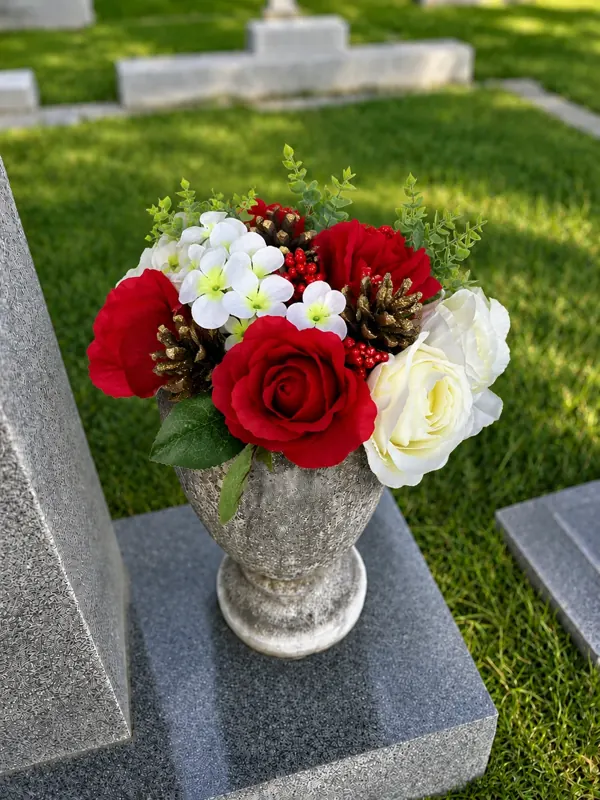 Christmas · Order by Dec 3Holiday Arrangement
 Christmas · Order by Dec 3Holiday Wreath
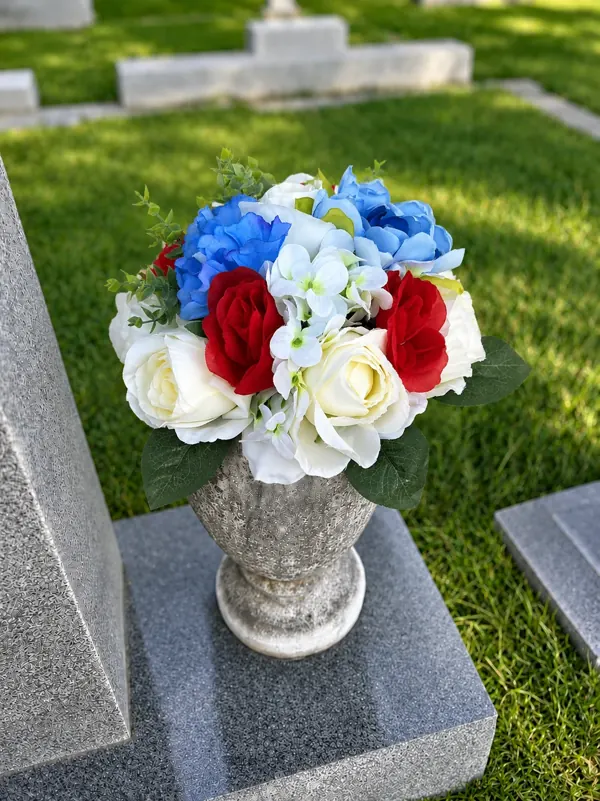 Red, White & Blue
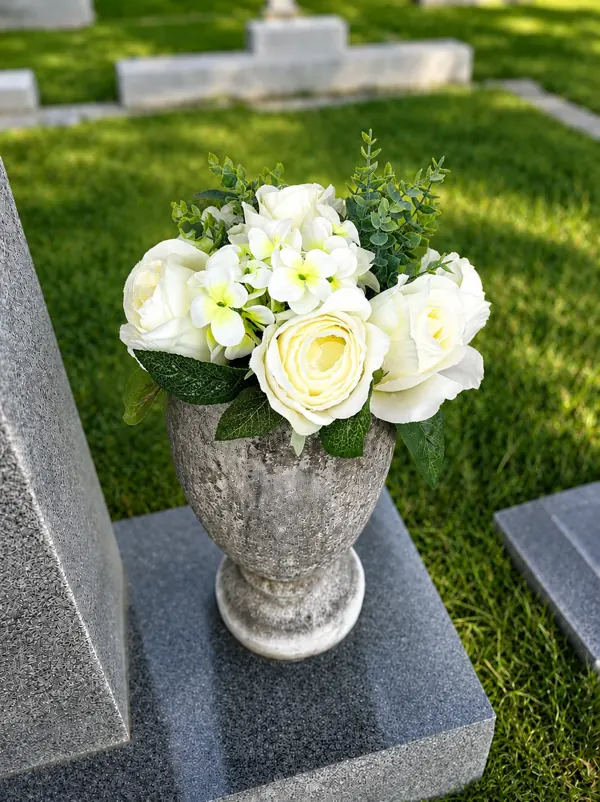 White Roses & Hydrangeas
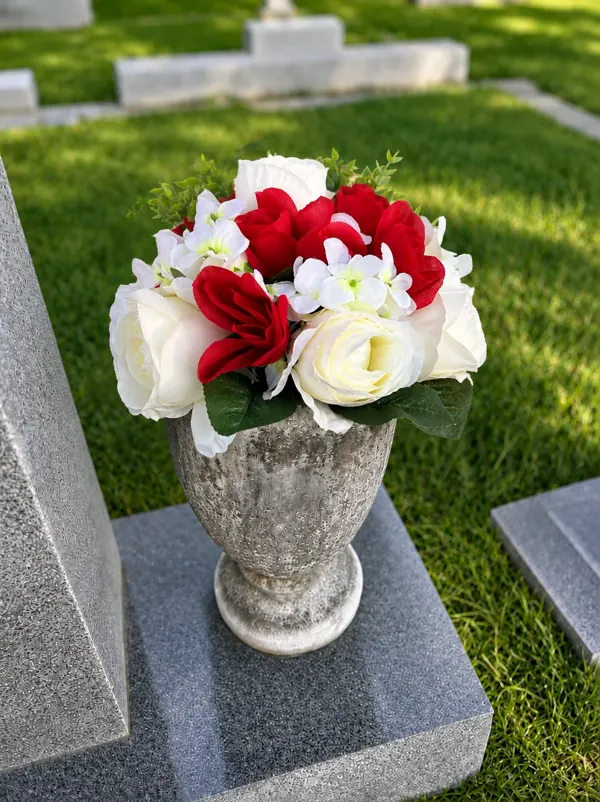 Red & White Roses
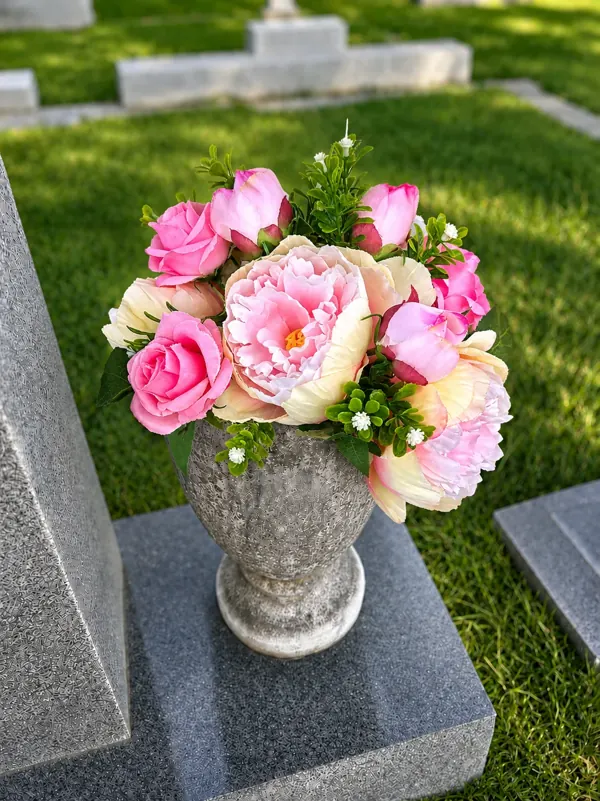 Pink Roses & Peonies
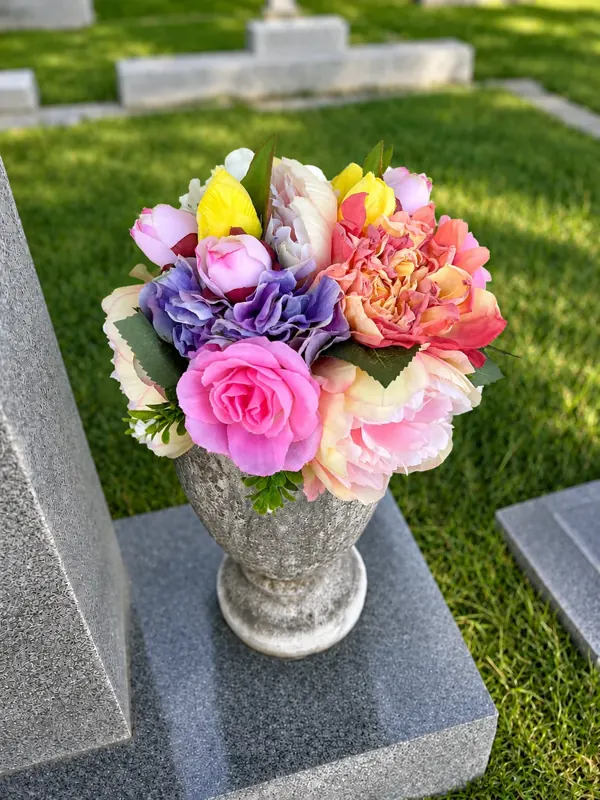 Pastel Multicolor
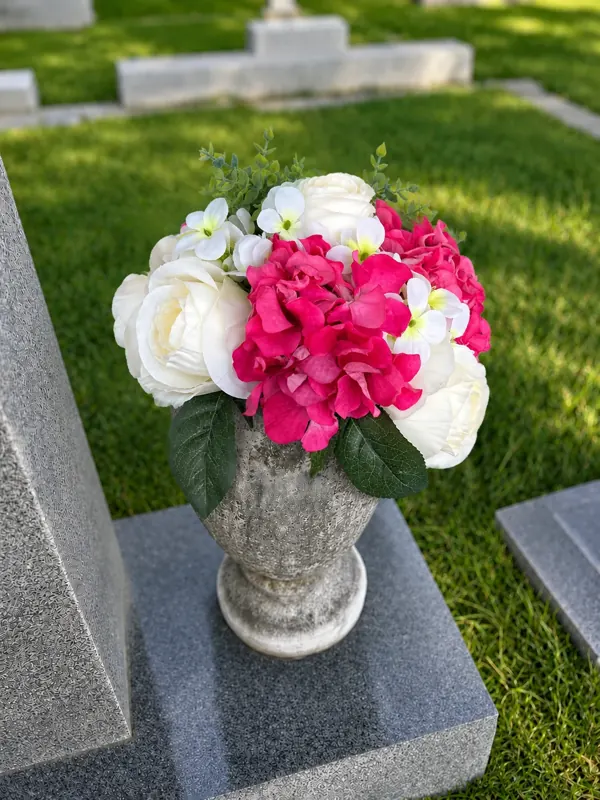 Hot Pink & White Roses
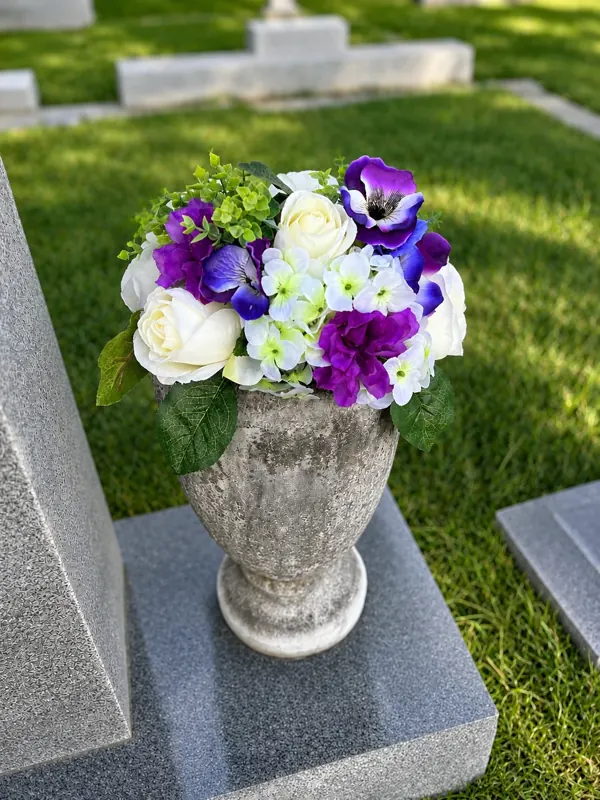 Purple Arrangement
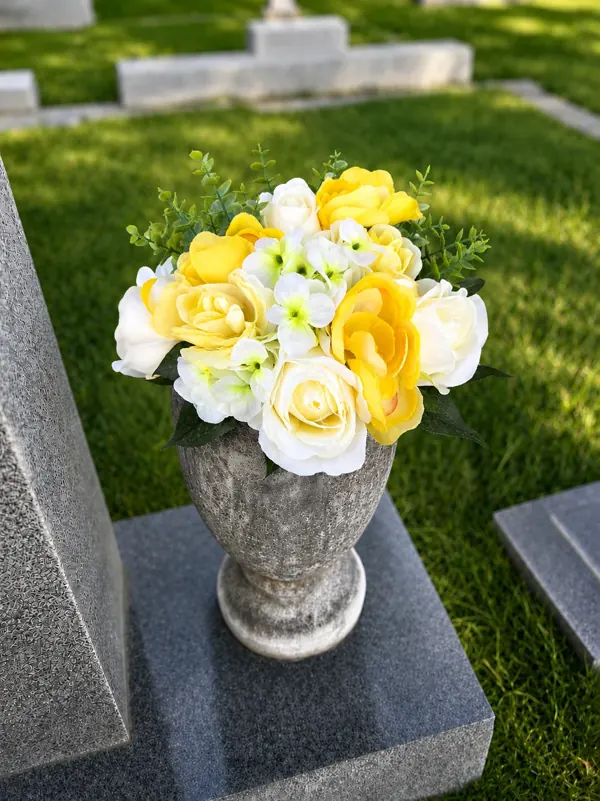 Yellow Arrangement
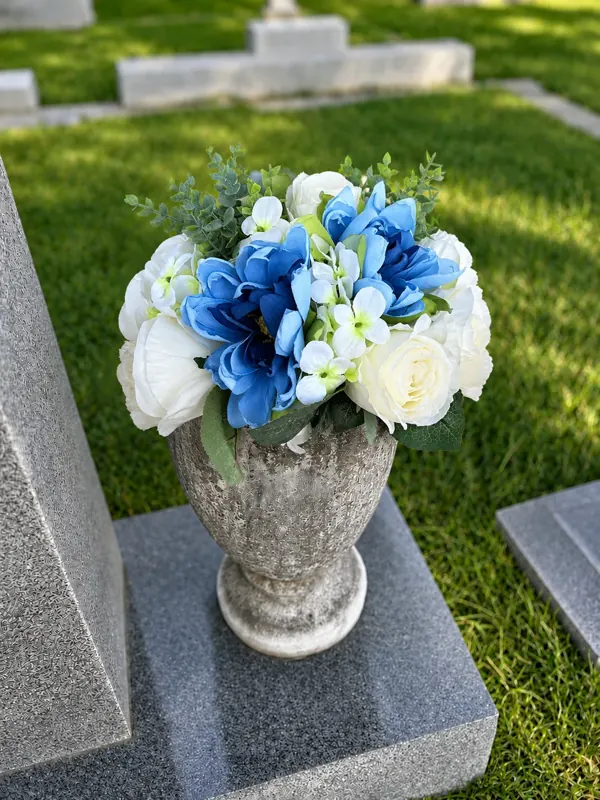 Blue Arrangement
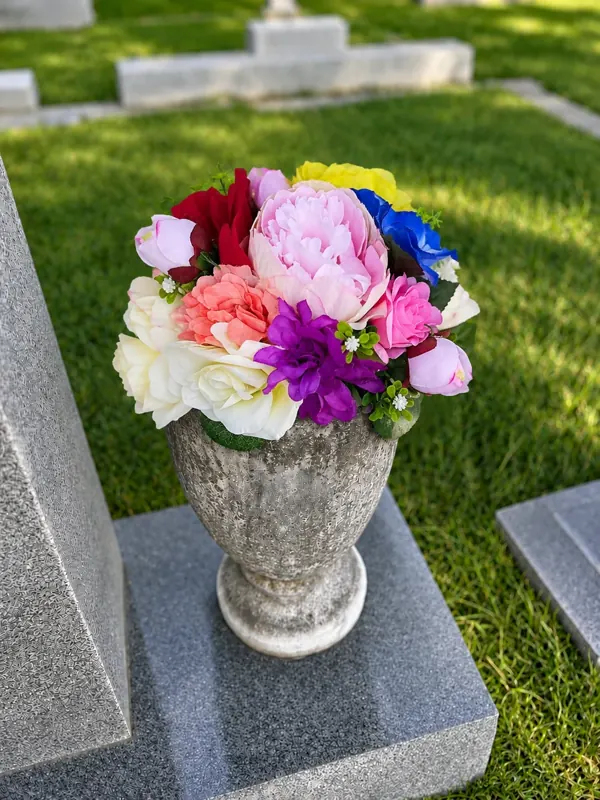 Birthday Arrangement
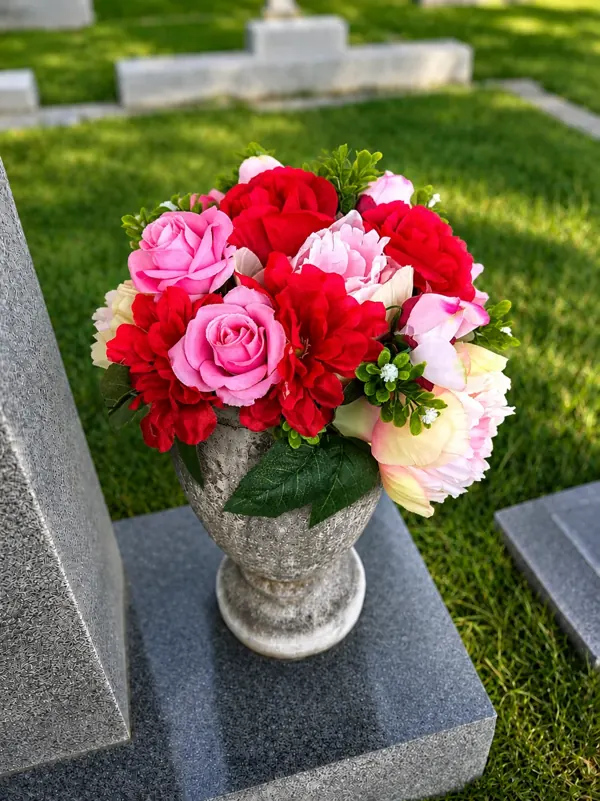 Always My Valentine
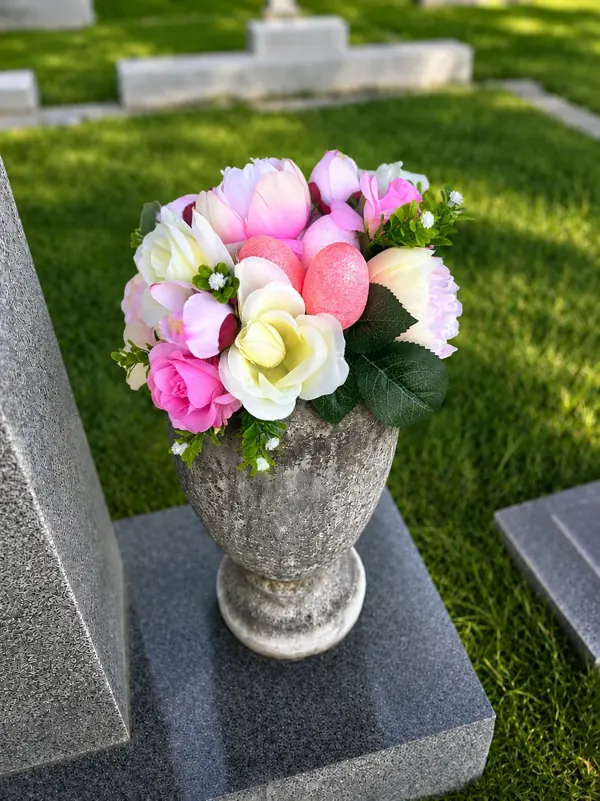 Easter Arrangement
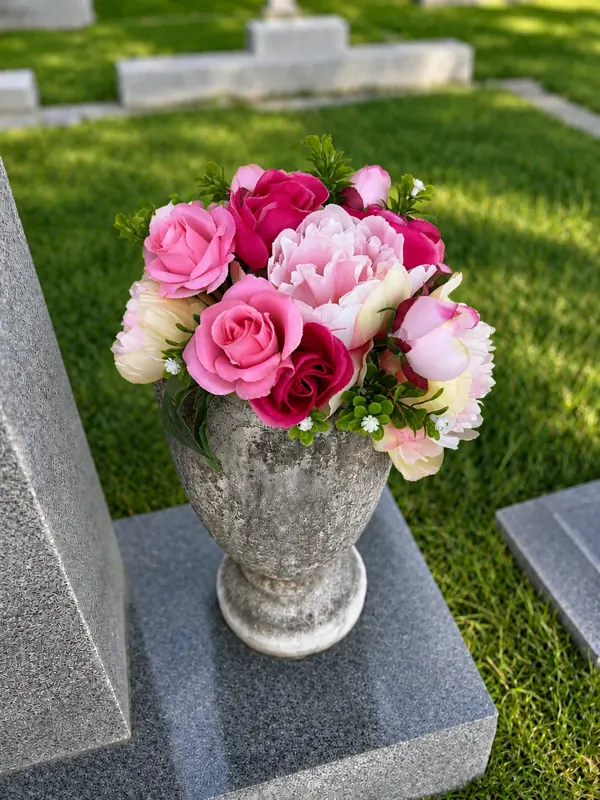 Breast Cancer Awareness
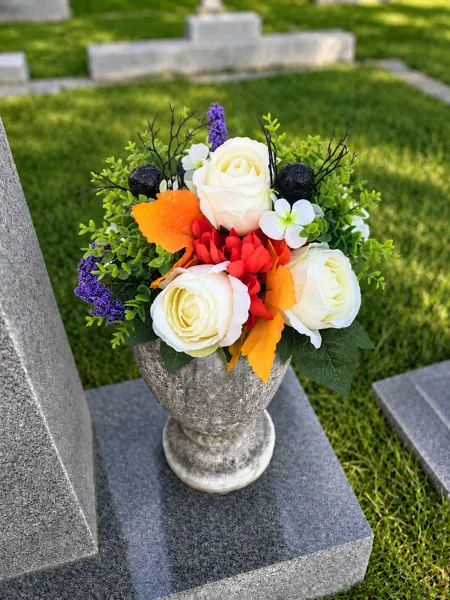 Halloween Arrangement
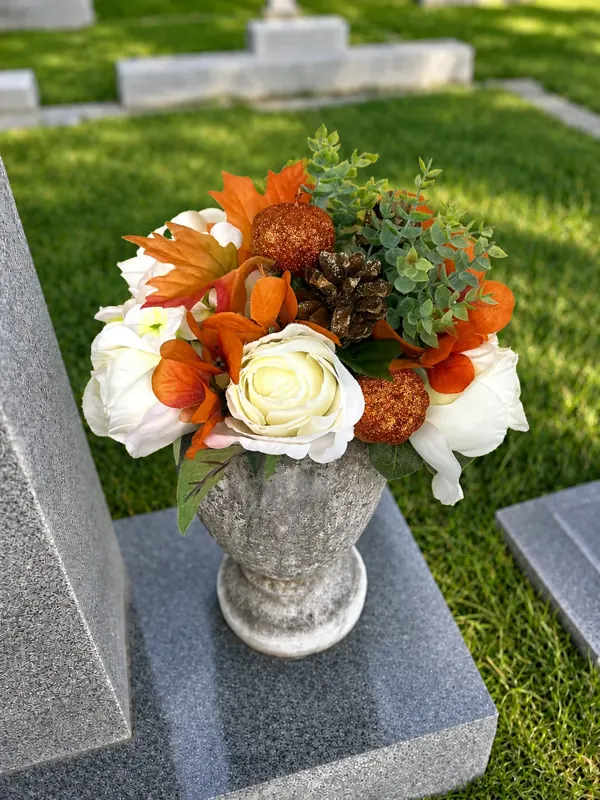 Fall Arrangement
Grave flower delivery to any cemetery in all 50 states · find yours by state
Flowers at the grave, wherever it is
A local BloomBridge Runner places a hand-crafted arrangement at any cemetery in all 50 states and sends you a photo of it in place.
Send FlowersFrequently asked questions
It depends on the cemetery. Some never allow potted plants, some allow them only around Easter or in the cooler months, and many private cemeteries allow them for a short time. Ask the cemetery office first.
You can where pots are allowed, but it rarely lasts. Moth orchids are tropical houseplants that need nights above about 60 degrees and little direct sun, so cold, heat and full sun damage them quickly.
Fresh-cut flowers in the cemetery's vase are accepted almost everywhere, and silk flowers last for months. Both avoid the breakage and mowing problems that lead cemeteries to ban pots.