What to Put on a Grave
Planting Flowers on a Grave: What Cemeteries Allow and What Actually Grows
Can you plant flowers on a grave? What national, Catholic and private cemeteries say about in-ground plantings, the 12-inch bed rule, which annuals survive with no one to water them, and the potted alternative.
Planting something living on a grave feels right to a lot of people, and it is the first thing many cemeteries forbid. Whether you can do it depends entirely on where the grave is. Here is what cemeteries of each kind say, quoted from their own rules, and what grows if you are allowed.
National cemeteries: no
The National Cemetery Administration's floral directive prohibits "permanent, in-ground plantings" at every VA national cemetery, along with non-government containers such as pots and planters. Potted plants are allowed only in a window each cemetery sets; Fort Bliss National Cemetery, for example, permits them from 10 days before to 10 days after Easter. If the grave is in a national cemetery, the answer is cut flowers in the cemetery's vases, and nothing in the ground.
Catholic and church cemeteries: often a small bed
Many diocesan cemeteries allow annuals in a defined bed. The Catholic cemeteries of the Archdiocese of Newark, including Holy Cross in North Arlington, permit "annual plantings in beds 12-inches deep and the length of the memorial," while shrubbery and roses are not permitted. Anything outside the rules is removed on the clean-up dates without notice. Twelve inches in front of the stone, no wider than the stone, is a common formula.
Large private cemeteries: with permission
Woodlawn in the Bronx allows "a 12-inch rectangular border" planted in front of the main monument or grave markers, as approved by the cemetery, and requires written permission before any planting begins. Blanket plantings of ivy or myrtle are not allowed anywhere on the grounds, and trees and shrubs are not allowed on single graves. Memorial parks with flat markers usually go further and allow no planting at all. Forest Lawn in Glendale permits potted plants under one gallon, set on the marker or in a ground vase, and nothing in the lawn.
What actually grows on a grave
A grave bed is a hard garden: full sun, mower traffic at the edges, and nobody to water it between visits. Choose plants that take that:
- Marigolds and zinnias for summer sun with little water.
- Petunias and vinca (annual periwinkle) for heat.
- Begonias and impatiens for a grave under trees.
- Pansies and violas for spring and fall in cool climates.
- Mums in pots for fall, where pots are allowed.
Skip anything that spreads (ivy, mint, groundcovers), anything that grows tall enough to hide the inscription, and bulbs unless the cemetery says yes, since they come back each year whether the rules change or not. Plan to visit to water in the first two weeks, or plant just before a stretch of rain.
Who maintains it
You do. Cemeteries mow and trim around a bed but do not water or weed it, and an overgrown or dead planting is the first thing a crew removes. If you cannot get there regularly, a potted plant for a visit or a silk arrangement in the vase is the honest choice, and most cemeteries prefer it. Our guides to cemetery flower rules and grave decoration ideas cover the alternatives. When in doubt, check with the cemetery.
Where planting is not allowed, or you cannot be there to tend it, a BloomBridge Runner can place a silk arrangement such as the Fall Arrangement at the grave, within the cemetery's rules, and send you a photo of it at the headstone.
Placed at the grave by a local Runner
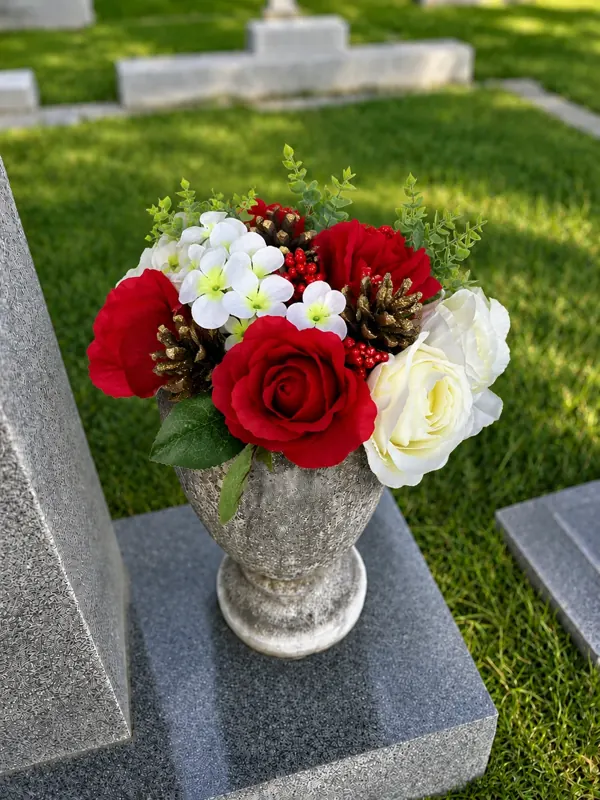 Holiday Arrangement
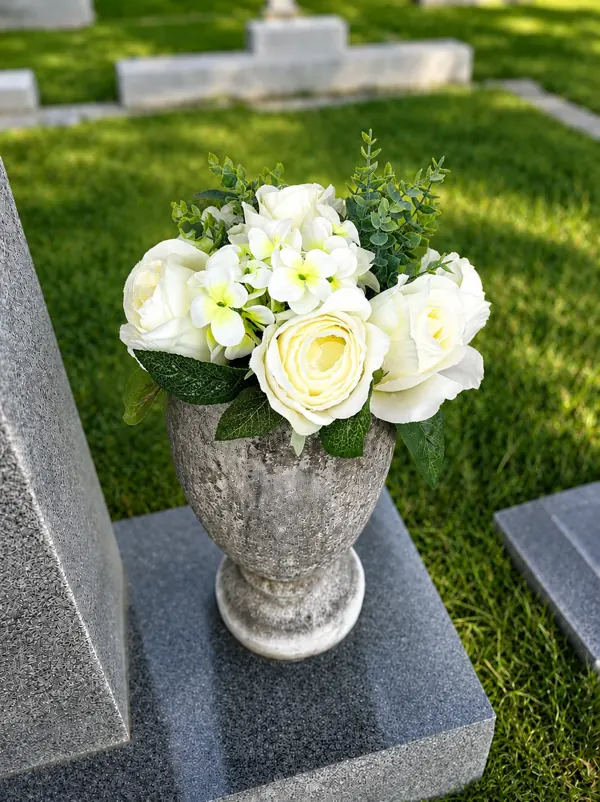 White Roses & Hydrangeas
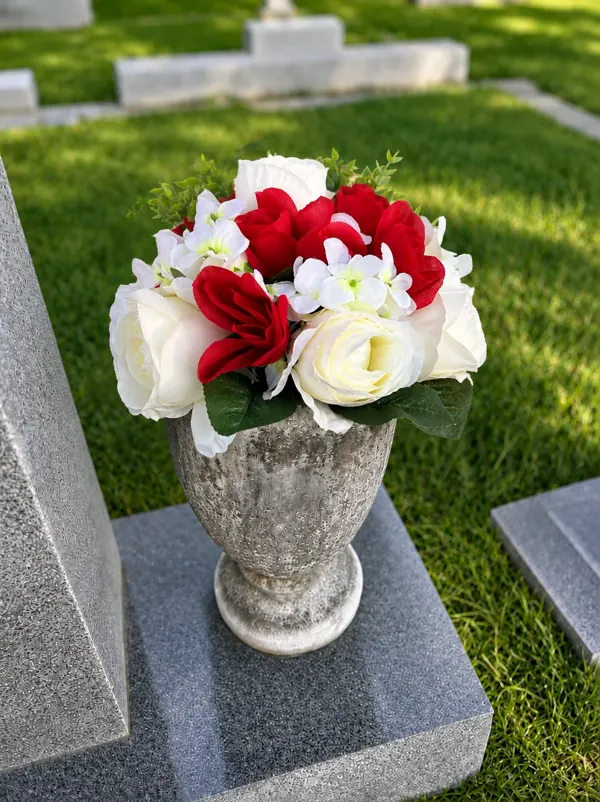 Red & White Roses
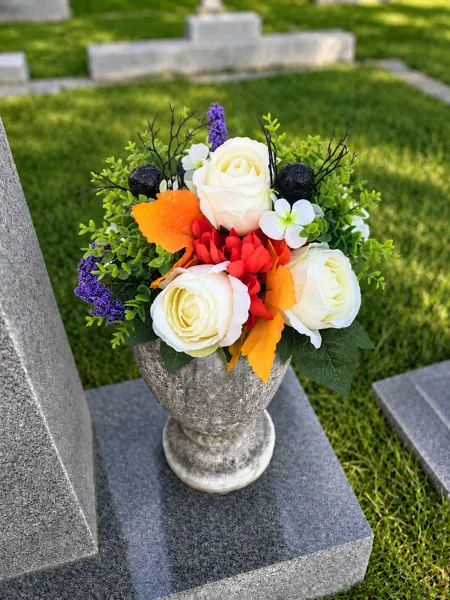 Halloween Arrangement
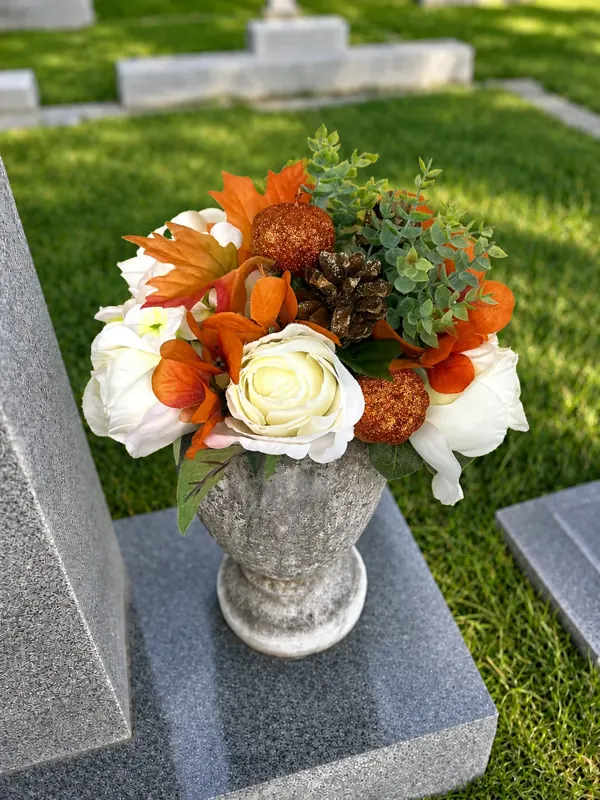 Fall Arrangement
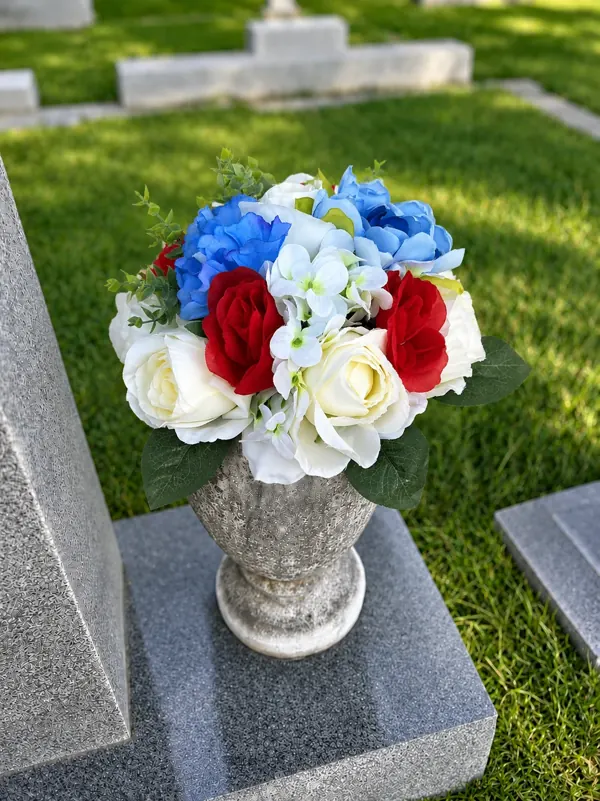 Red, White & Blue
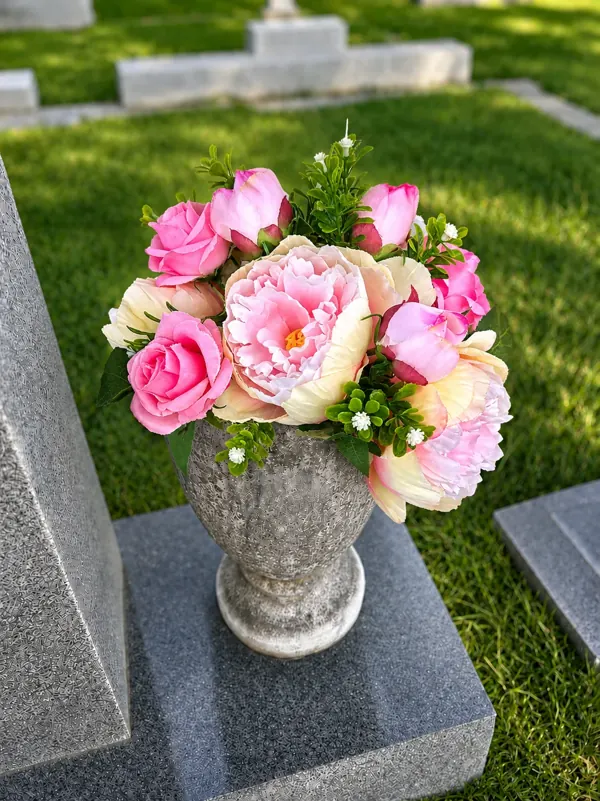 Pink Roses & Peonies
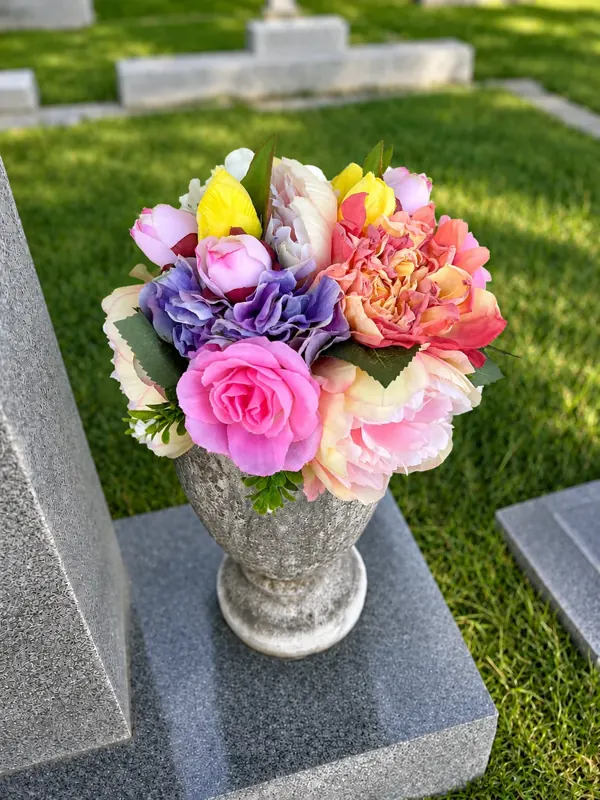 Pastel Multicolor
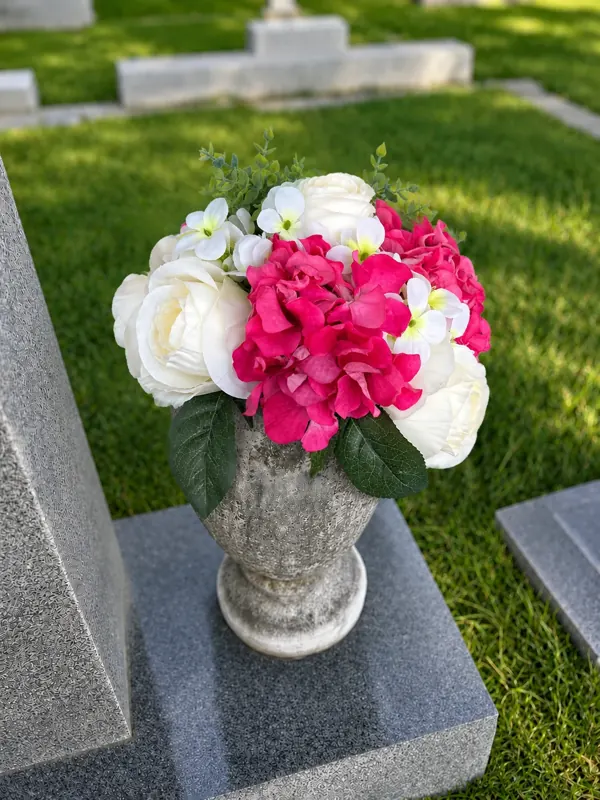 Hot Pink & White Roses
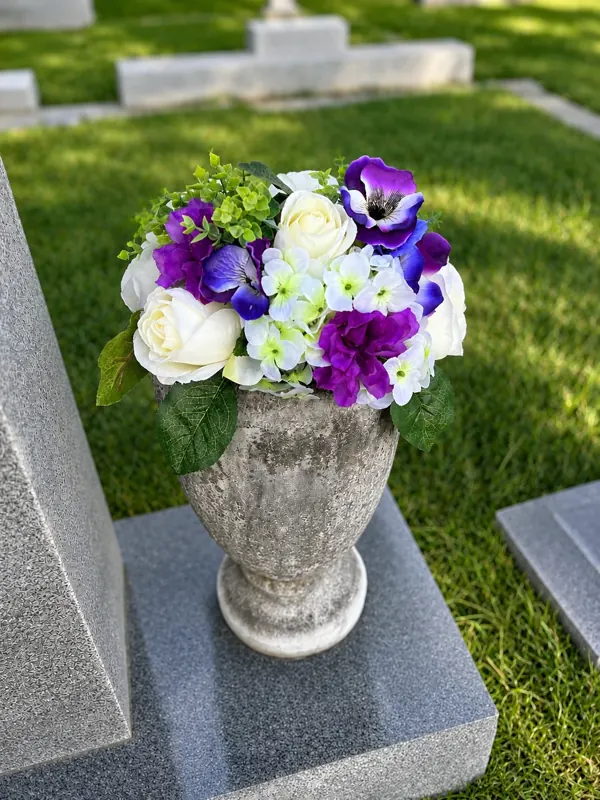 Purple Arrangement
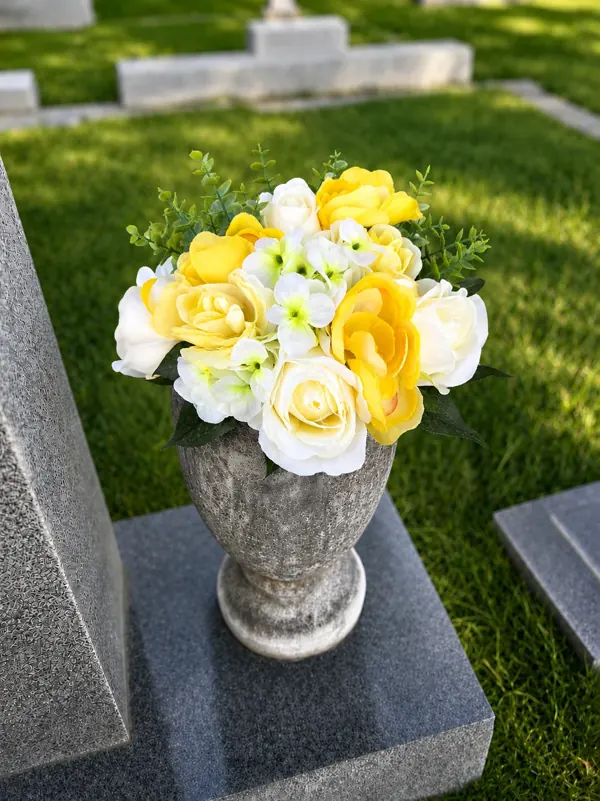 Yellow Arrangement
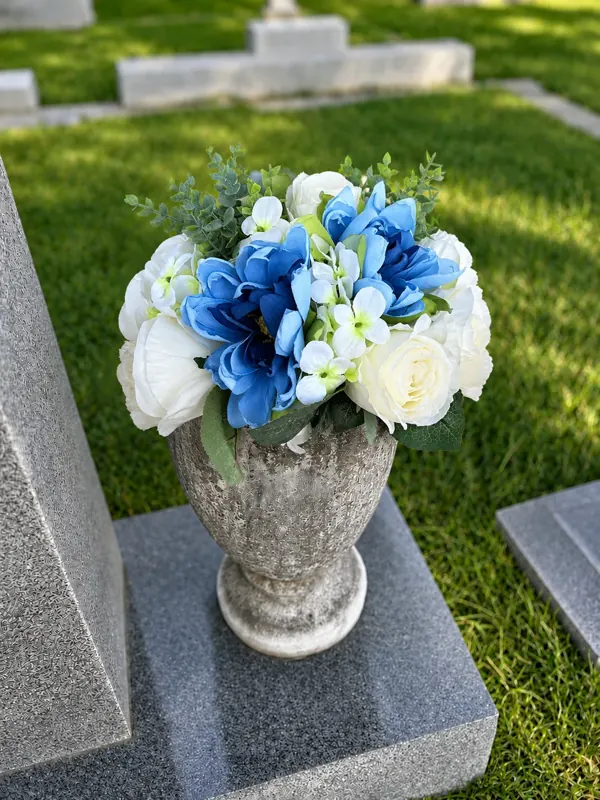 Blue Arrangement
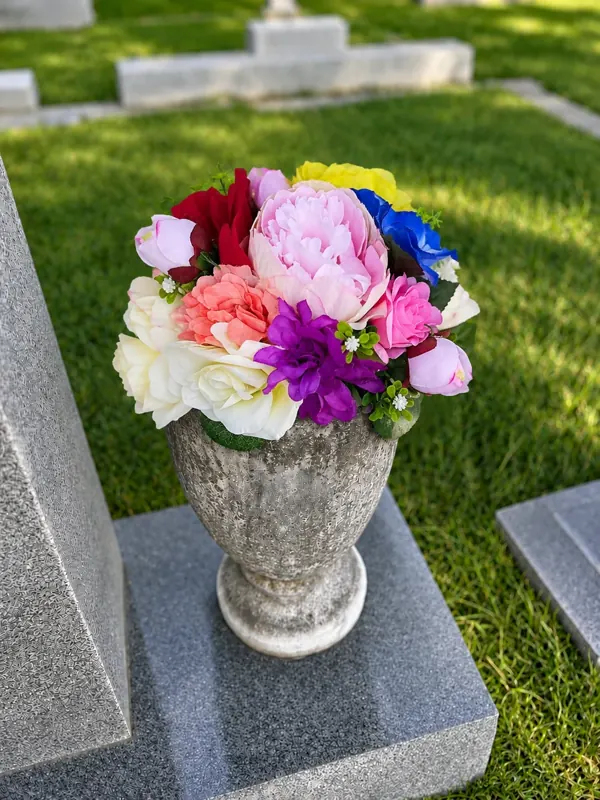 Birthday Arrangement
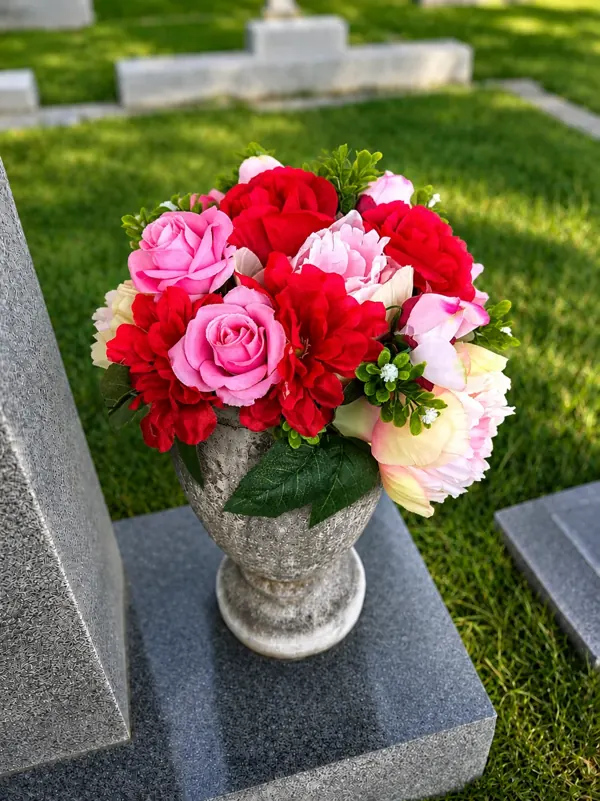 Always My Valentine
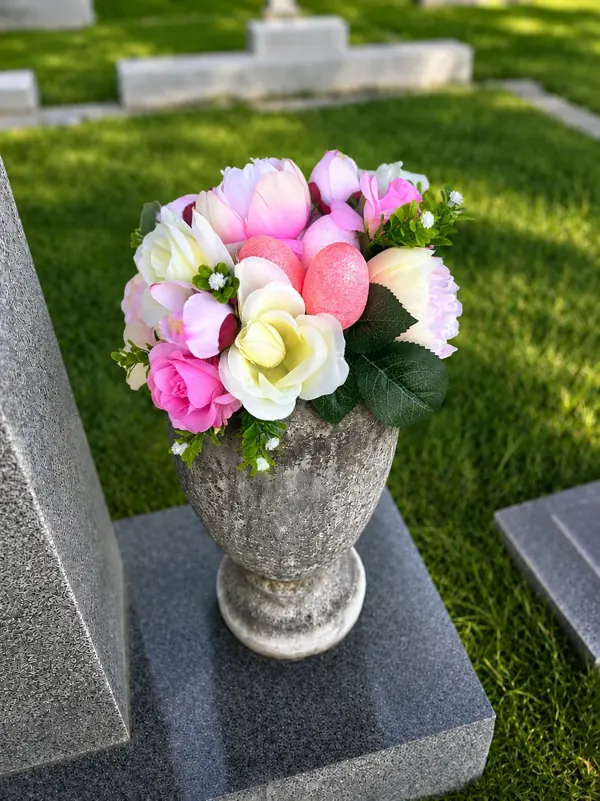 Easter Arrangement
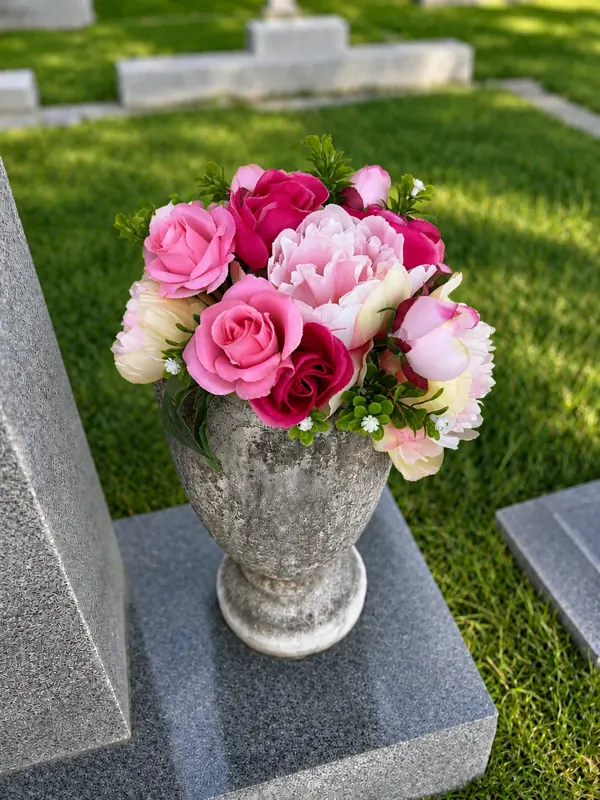 Breast Cancer Awareness
Grave flower delivery to any cemetery in all 50 states · find yours by state
Flowers at the grave, wherever it is
A local BloomBridge Runner places a hand-crafted arrangement at any cemetery in all 50 states and sends you a photo of it in place.
Send FlowersFrequently asked questions
It depends on the cemetery. VA national cemeteries prohibit all in-ground plantings. Many Catholic and private cemeteries allow annuals in a bed about 12 inches deep in front of the stone, often with approval. Always check the cemetery's rules first.
Tough, low annuals: marigolds, zinnias, petunias and vinca for sun; begonias and impatiens for shade; pansies for cool seasons. Avoid spreading groundcovers and anything tall enough to hide the inscription.
The family. Cemeteries mow around a bed but do not water or weed it, and dead or overgrown plantings are removed. If you cannot visit to tend it, use a potted plant or a silk arrangement instead.