Flower Guides
Graveside Flowers: What the Term Means and the Forms They Come In
Graveside flowers are the flowers placed at the grave itself, as opposed to funeral or sympathy flowers. The forms they take, from vase arrangements to saddles, wreaths and blankets, which suits which grave, and how they reach the cemetery.
Florists and cemeteries use several words for flowers connected to a death, and they are not interchangeable. Funeral flowers go to the service. Sympathy flowers go to the family's home. Graveside flowers, also written grave side flowers or grave flowers, are the ones placed at the grave itself, in the days after the burial and in all the years that follow. This guide is about that last kind.
Graveside flowers at the burial
At the committal, the flowers from the service often travel to the grave and are laid on the ground once the casket is lowered. Some families hand each guest a single stem to place on the casket. Cemeteries then remove the service flowers within a few days, Forest Lawn in Glendale on the third day after the burial, for example, so none of it stays long. Our guide to what happens to funeral flowers covers the rest.
Graveside flowers afterward: the forms
- Vase arrangement. The standard. Stems in the vase built into the headstone, a ground vase sunk beside a flat marker, or the plastic cone vase a national cemetery provides. Keep it under the height of the stone.
- Headstone saddle. A curved arrangement that sits over the top of an upright headstone, for stones without a vase. Our guide compares a saddle and a ground vase.
- Staked arrangement. A vase on a spike pushed into the ground, used where there is no vase at all and the cemetery allows it.
- Wreath. On a stand or laid flat, most often at Christmas and for veterans in December. Many cemeteries limit wreath size and dates.
- Grave blanket. A mat of evergreen boughs laid over the grave in winter, a tradition in northern states. See what a grave blanket is.
- Potted plant. A mum in fall or a lily at Easter, where the cemetery allows pots, which is often only for a holiday window.
Fresh or silk
Fresh graveside flowers last a few days in summer and up to two weeks in cool weather, and the cemetery removes them when they wilt. Silk graveside flowers hold their color for months, which is why they are the usual choice for a grave between visits, in the season the cemetery allows them. Most private cemeteries allow silk year-round; VA national cemeteries allow it only in a fall-to-spring window. Our guide to silk or fresh flowers for a grave weighs the two.
Which flowers
Roses, lilies, carnations and chrysanthemums are the flowers seen most at graves, with red, white and blue for veterans and the person's own favorite above any tradition. Our guides to the best flowers for a grave and flower meanings go flower by flower.
How they get there
Either you bring them, or someone goes for you. Florists deliver to funeral homes, not usually to graves, and cemetery offices rarely accept deliveries. A graveside delivery service sends a person to the grave to place the flowers and photograph them, which is the only way to know they arrived. See how grave delivery works.
BloomBridge makes graveside flowers in outdoor silk, in vase, saddle and staked forms to suit the grave, and a local Runner places them within the cemetery's rules and sends you a photo at the headstone. Browse the arrangements.
Placed at the grave by a local Runner
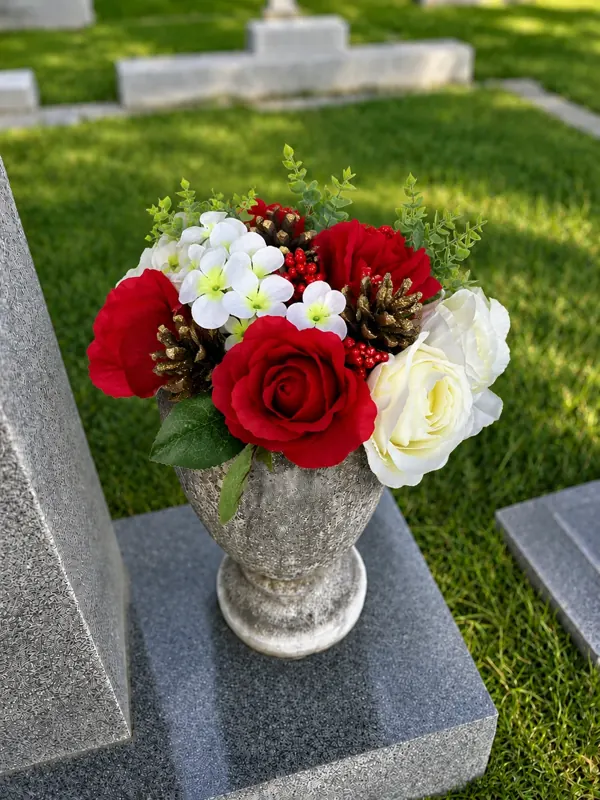 Holiday Arrangement
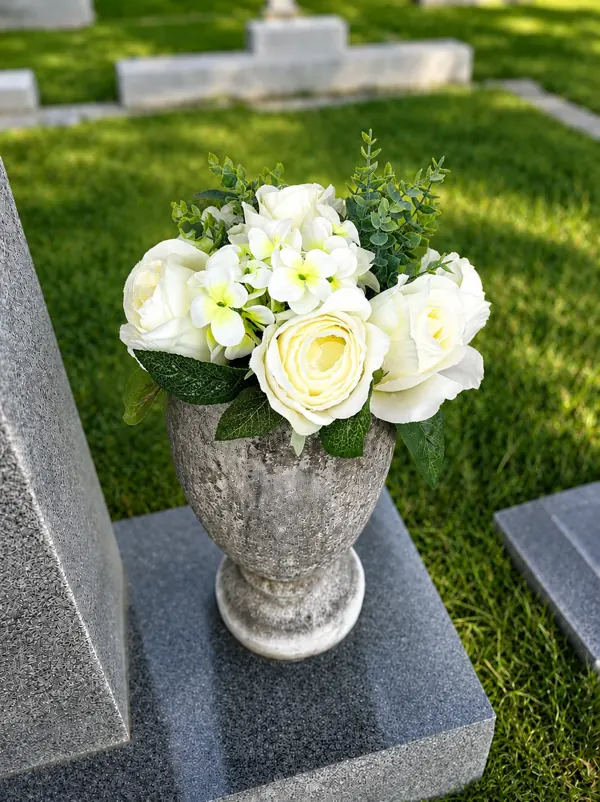 White Roses & Hydrangeas
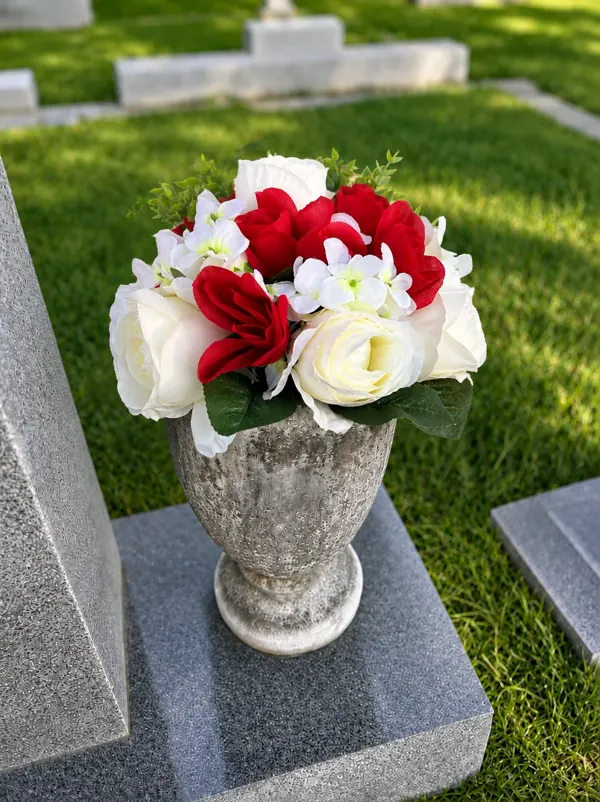 Red & White Roses
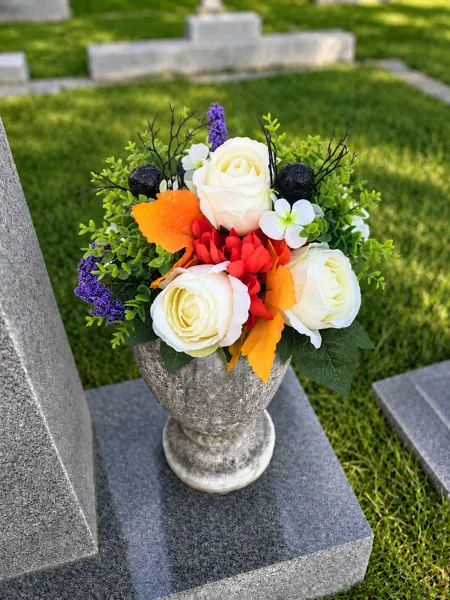 Halloween Arrangement
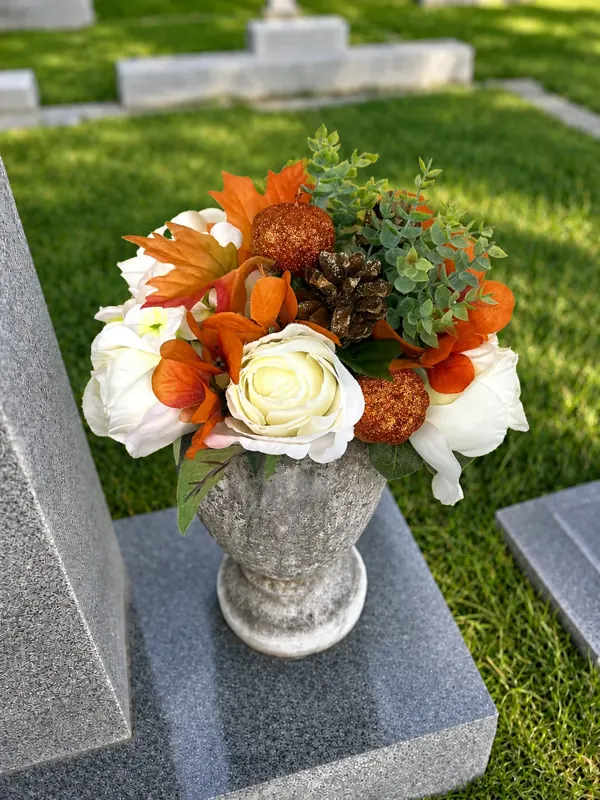 Fall Arrangement
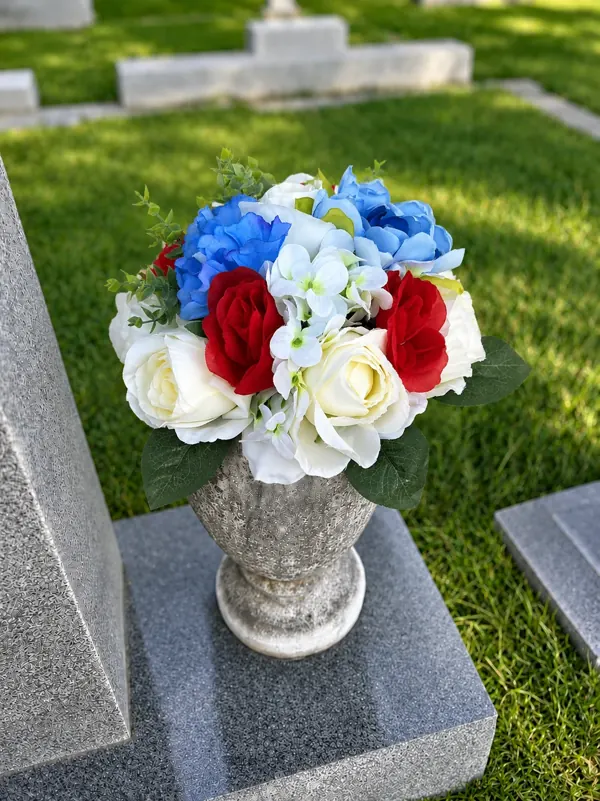 Red, White & Blue
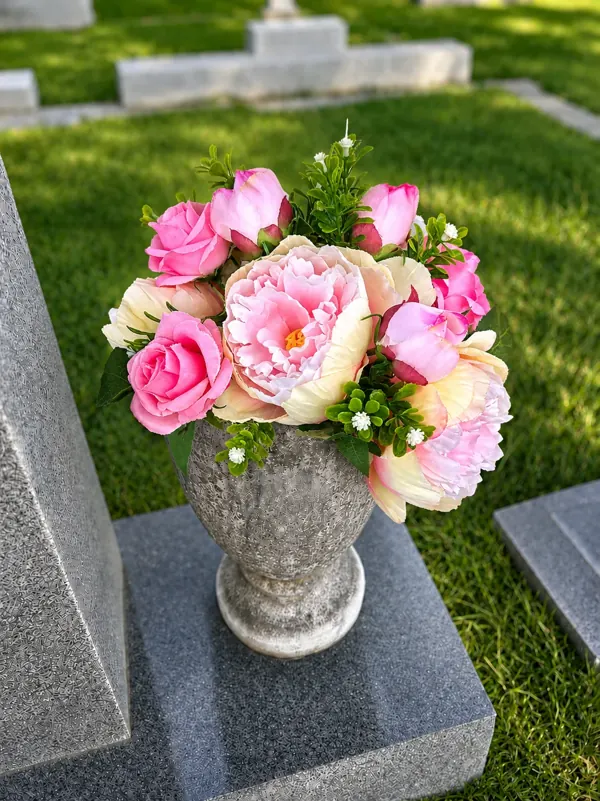 Pink Roses & Peonies
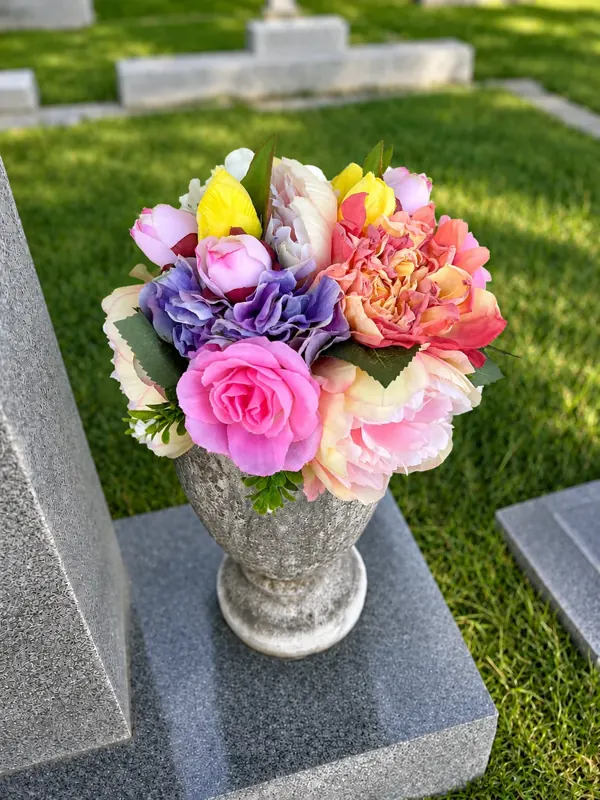 Pastel Multicolor
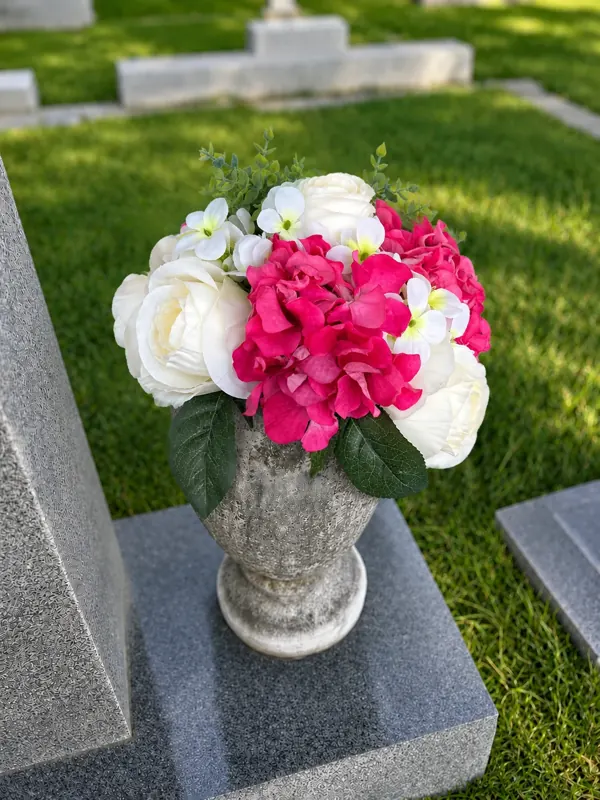 Hot Pink & White Roses
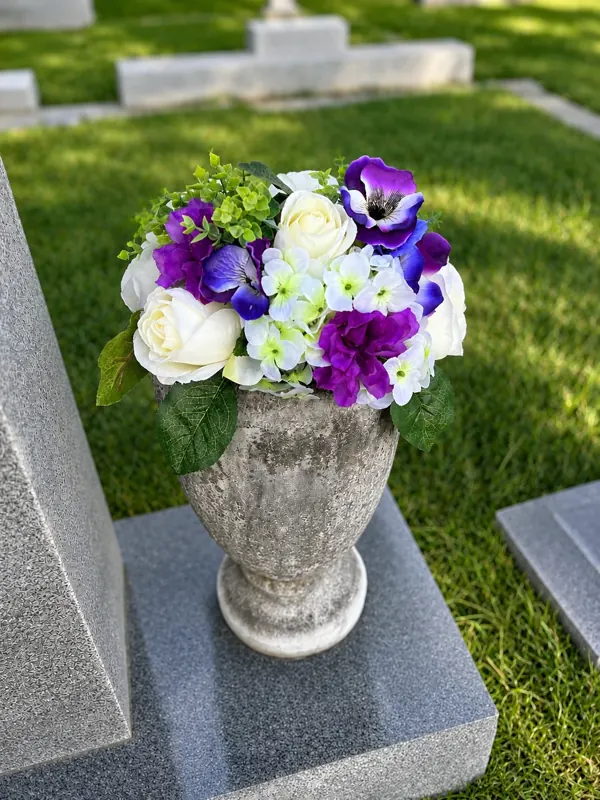 Purple Arrangement
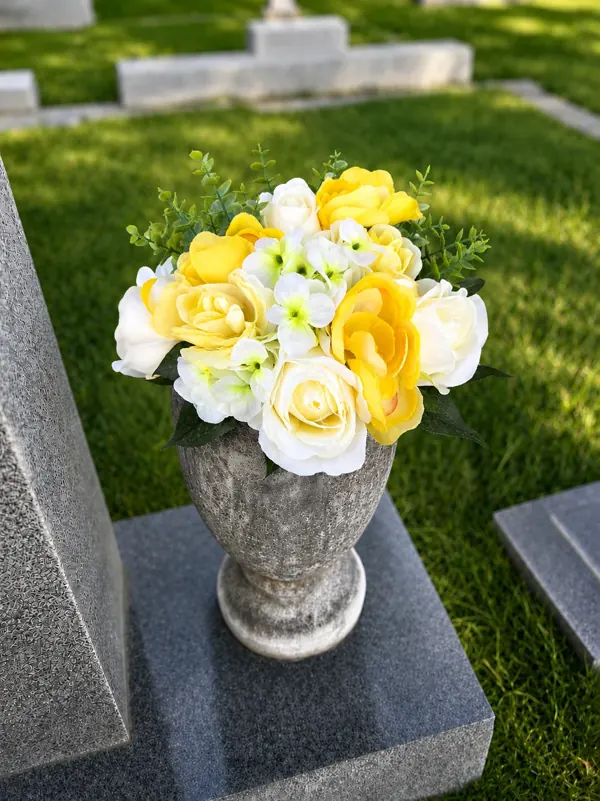 Yellow Arrangement
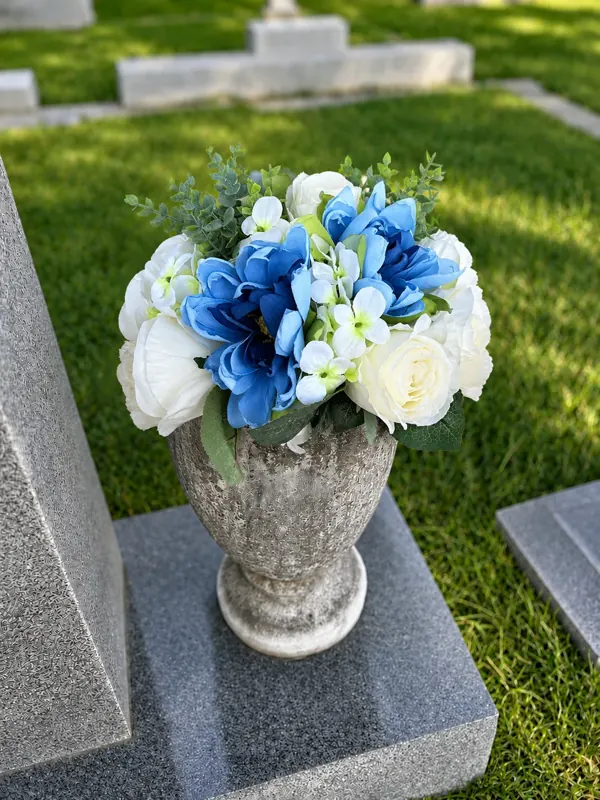 Blue Arrangement
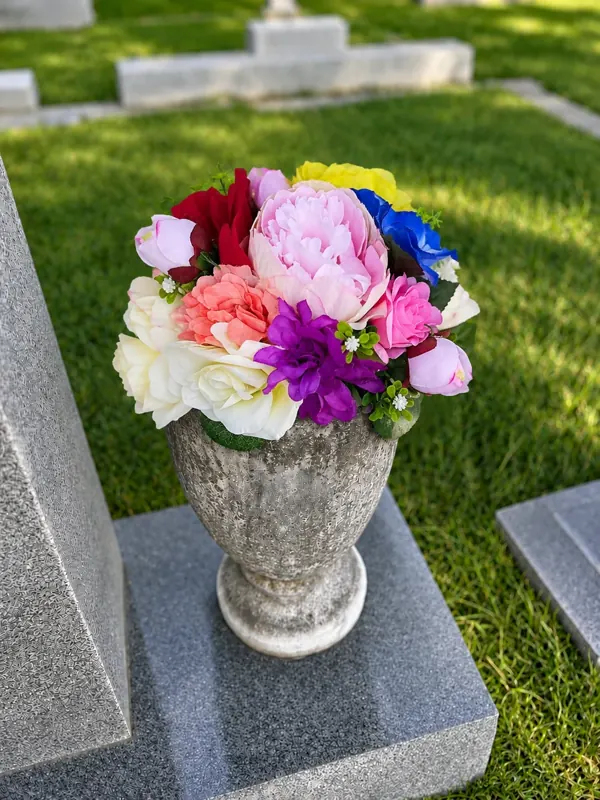 Birthday Arrangement
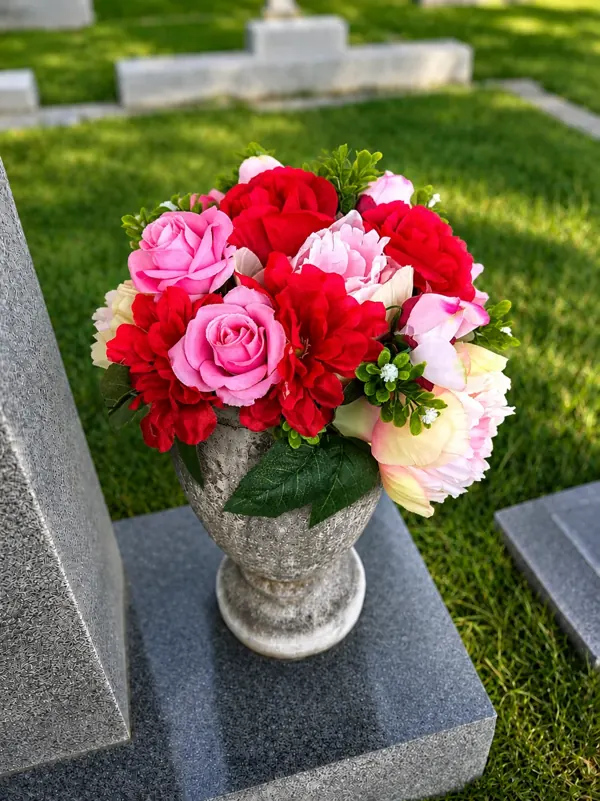 Always My Valentine
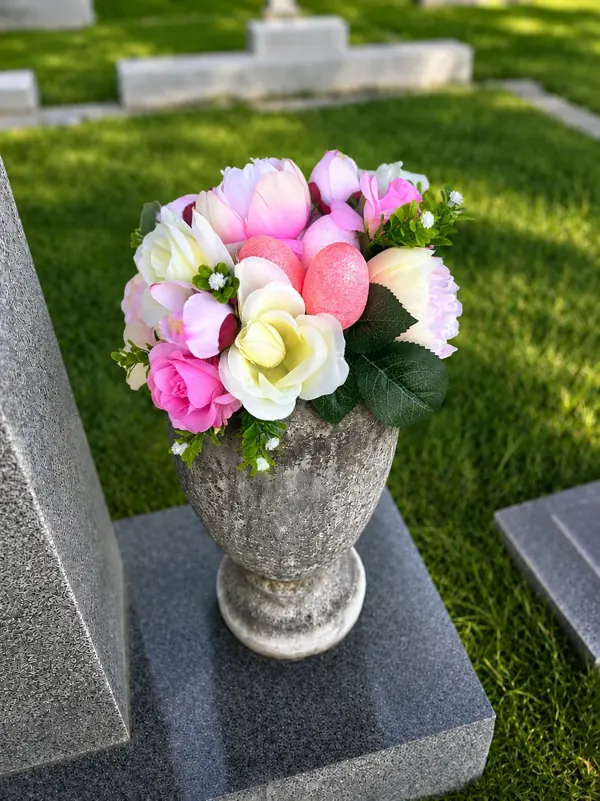 Easter Arrangement
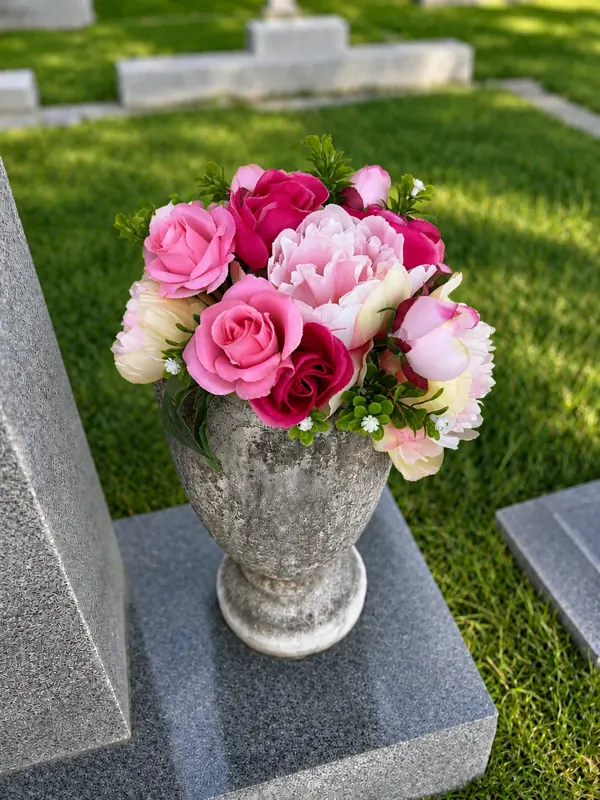 Breast Cancer Awareness
Grave flower delivery to any cemetery in all 50 states · find yours by state
Flowers at the grave, wherever it is
A local BloomBridge Runner places a hand-crafted arrangement at any cemetery in all 50 states and sends you a photo of it in place.
Send FlowersFrequently asked questions
Flowers placed at the grave itself, as opposed to funeral flowers at the service or sympathy flowers sent to the family. They range from a vase arrangement to a saddle, wreath, grave blanket or potted plant.
Funeral flowers are displayed at the service and usually removed from the grave within days. Grave or graveside flowers are placed at the grave afterward and on later visits, and are chosen to last outdoors.
Most florists deliver to funeral homes and houses, not graves, and cemetery offices rarely accept deliveries. A graveside delivery service places the flowers at the grave and photographs them in place.