Planning & How-To
How to Find Out Where Someone Is Buried: Records, Databases and Who to Call
Seven ways to find where someone is buried, in the order that works: obituaries, Find a Grave, BillionGraves, the VA locator, funeral homes and county records.
Our guide to finding a grave in a cemetery assumes you know the cemetery. Often you do not. A grandparent died before you were born, a family moved twice since, the one relative who knew is gone. This is the search for the cemetery itself, in the order that finds it fastest.
1. The obituary
Obituaries almost always name the cemetery, and obituaries from roughly the last twenty-five years are online: funeral home websites, Legacy.com, newspaper archives, and free newspaper databases through most public libraries. Search the full name with the town and a year. Older obituaries are on microfilm at the library serving the town where the person died; librarians will search a date range for you by email.
2. The death certificate
A death certificate lists the place of disposition: the cemetery, or the crematory. Close relatives can order one from the state vital records office, usually online, for a small fee. For deaths more than a few decades ago, many states have released the records to genealogy sites, where they are searchable for free.
3. Find a Grave and BillionGraves
Find a Grave has memorials for a very large share of American burials, built by volunteers from headstone photos and obituaries. Search the name with a death year; if there are several matches, the birth year, spouse's name or a middle initial narrows it. BillionGraves is a second database built from GPS-tagged headstone photos and catches some the first misses. Our guide to Find a Grave memorials explains the site.
4. Veterans
For anyone who served, the VA's Nationwide Gravesite Locator covers national cemeteries, state veterans cemeteries and many private cemeteries where a government headstone was supplied. It gives the cemetery, section and grave. Our national cemetery guide has more.
5. The funeral home
If the family remembers which funeral home handled the service, call it. Funeral homes keep records for decades, and the record states the cemetery. If the home has closed, another local home usually took its files; the state funeral directors' association can say which.
6. The cemeteries themselves
When you know the town but not the cemetery, list the cemeteries in it (Find a Grave lists cemeteries by county) and call each office with the name and approximate year. Church cemeteries keep the register at the parish; municipal ones at the town clerk or public works office. Most look up a name in minutes.
7. County and church records
Older burials appear in county death registers, church burial registers, and the cemetery transcriptions that local genealogical societies have compiled for a century. The county genealogical or historical society is the best single phone call for a burial before about 1950.
When the grave is found
Write down the cemetery, section and lot, add them to the Find a Grave memorial so the next relative does not have to search, and if you cannot get there yourself, have flowers placed and a photo taken. Many families see a grandparent's grave for the first time that way. Our guide to caring for a grave from far away covers what comes next.
Give BloomBridge the cemetery and the name, and a local Runner finds the grave, places the flowers and sends you the photo, at any cemetery in all 50 states.
Placed at the grave by a local Runner
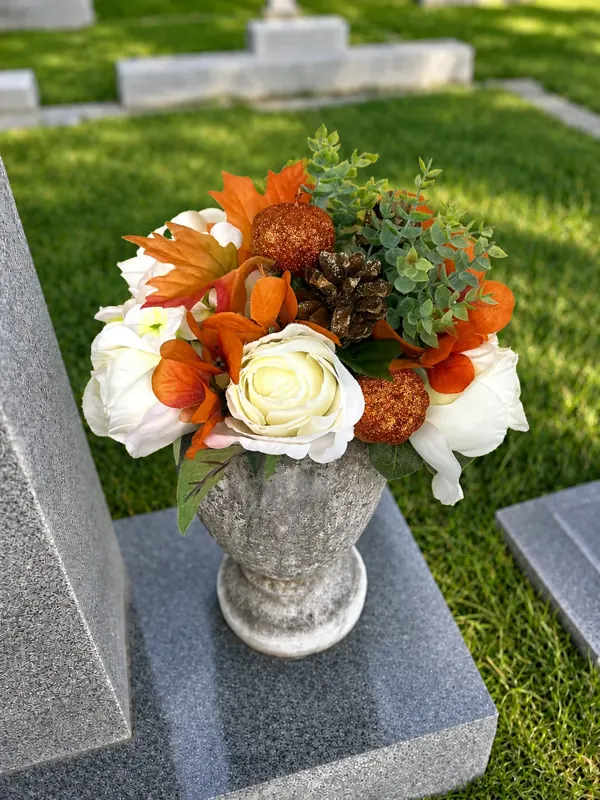 Fall Arrangement
 White Roses & Hydrangeas
 Red & White Roses
 Halloween Arrangement
 Holiday Arrangement
 Red, White & Blue
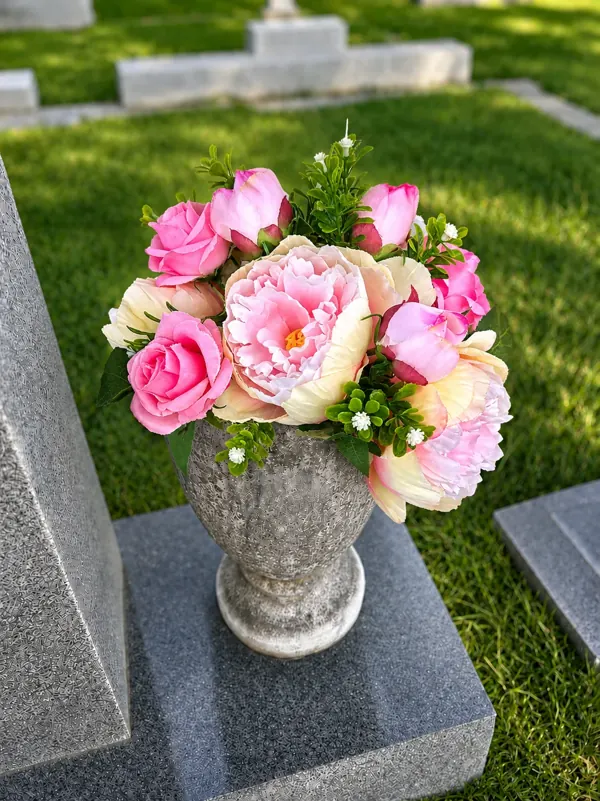 Pink Roses & Peonies
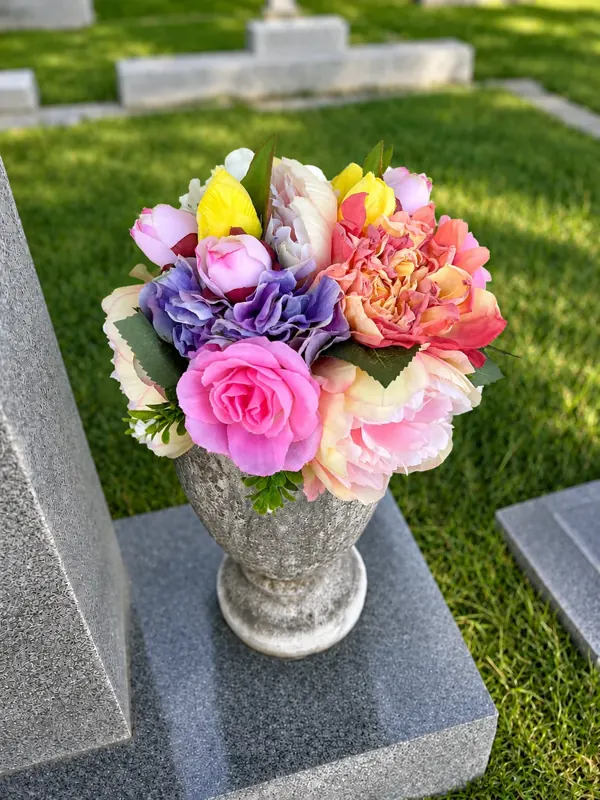 Pastel Multicolor
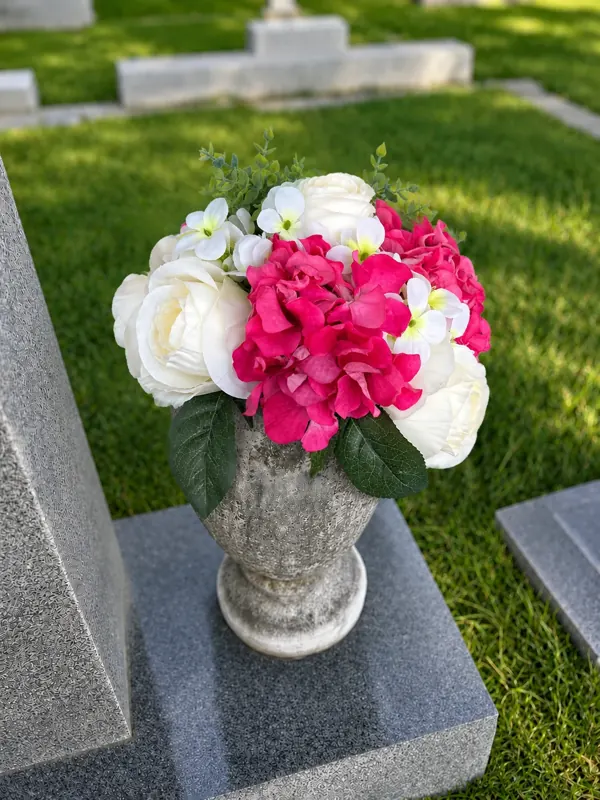 Hot Pink & White Roses
 Purple Arrangement
 Yellow Arrangement
 Blue Arrangement
 Birthday Arrangement
 Always My Valentine
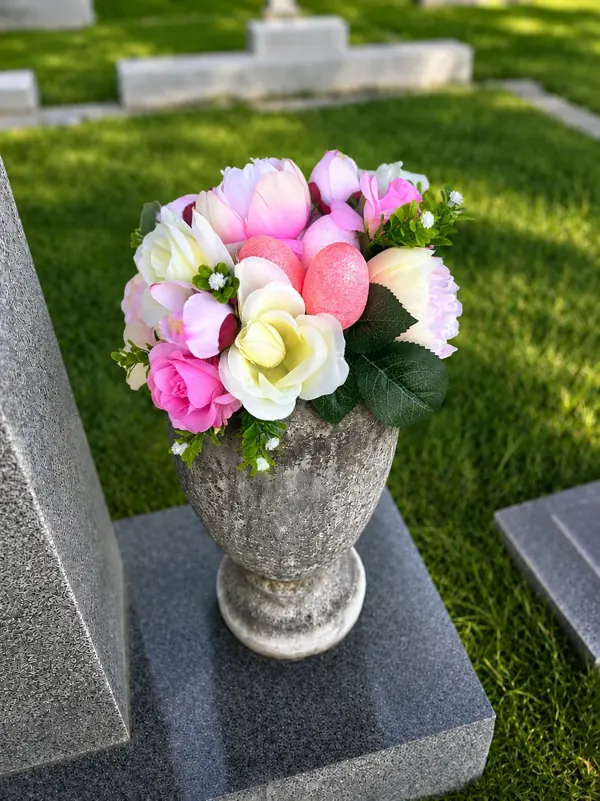 Easter Arrangement
 Breast Cancer Awareness
Grave flower delivery to any cemetery in all 50 states · find yours by state
Flowers at the grave, wherever it is
A local BloomBridge Runner places a hand-crafted arrangement at any cemetery in all 50 states and sends you a photo of it in place.
Send FlowersFrequently asked questions
Start with the obituary, then Find a Grave and BillionGraves, then the death certificate. For a veteran, the VA gravesite locator. Then the funeral home and the cemeteries in the town.
Yes. Find a Grave, BillionGraves, the VA locator, library obituary databases and most cemetery offices are free.
The death certificate names the crematory, and the funeral home record says what was done with the ashes: a niche, a burial, or returned to the family.