What to Put on a Grave
What Can You Put on a Grave Instead of Flowers?
Stones, flags, a written card, coins, photos, small keepsakes and winter wreaths: what you can leave at a grave besides flowers, what each one means, and what cemeteries clear away.
Flowers are the most common thing left at a grave, but they are far from the only one. A stone, a flag, a few written words or a coin can say just as much, and some of them carry traditions that are hundreds of years old. The catch is that cemeteries are maintained by mowers and crews on a schedule, so what you leave has to be small, weatherproof and in the right place, or it will be gone by the next visit. Here is what works, what it means, and what to skip.
Small things that are almost always welcome
- A stone. A small stone set on top of the headstone is the oldest sign that someone visited. It comes from Jewish tradition, and people of many faiths now leave one. A pebble from a place the person loved, a beach or a hometown, makes it personal. Our guide to Jewish grave customs explains the meaning.
- A small flag on a veteran's grave. Welcome at almost every cemetery, and expected around Memorial Day, Veterans Day and the Fourth of July. National cemeteries set their own windows, covered in our guide to flowers at a veteran's grave.
- A coin on a military headstone. A quiet tradition with specific meanings, explained below. Coins sit on top of the stone and stay out of the mower's way.
- A few written words. A short message on a card tucked into an arrangement, or a letter in a sealed, weatherproof sleeve. Plain paper on its own turns to pulp in the first rain. If you are not sure what to say, our guide on what to write on a card has examples for a parent, a spouse, a child and the holidays.
Things that work if you secure them
Most cemeteries allow personal items as long as they are on the stone or attached to the vase or saddle, never loose on the grass.
- A photo in a weatherproof frame clipped to the vase or saddle. Photos set into the headstone itself are permanent additions and need the cemetery's approval.
- Small keepsakes wired or tied in: a fishing lure, a golf ball, a team ribbon, a rosary, a small ornament or a toy car. Tied in means it survives wind and a passing mower; resting on the grass means it does not.
- A wreath on an easel or a grave blanket of evergreens in winter, once mowing has stopped. Our winter guide covers what holds up in snow.
- Solar lights at some cemeteries, in the vase or attached to the stone. Many memorial parks prohibit them, so ask first.
- Seasonal touches such as a small gourd in fall or a sprig of holly in December, set into the arrangement rather than beside it.
Things cemeteries usually remove
- Anything on the grass. Pots, statues, pinwheels, toys and loose bouquets in the mowing path are cleared on the next maintenance pass. For a child's grave, where toys and pinwheels are most common, our guide to flowers for a child's grave covers what parents do instead.
- Wind chimes. Many cemeteries do not allow them because the sound carries to neighboring graves and families.
- Food and drink. Removed quickly because they draw animals. The exception is a cemetery with a tradition for it, such as offerings on Día de los Muertos, covered in our All Saints' Day and Día de los Muertos guide.
- Glass and ceramics. Banned nearly everywhere because they shatter under mowers.
- Balloons. Prohibited at most cemeteries; they end up in trees and neighboring plots.
- Candles with a real flame, except where a cemetery has a specific tradition of them. Battery candles in a lantern are sometimes allowed.
- Plants and plantings. Shrubs, bulbs and ground cover interfere with maintenance. A few rural cemeteries allow small plantings at the stone; most do not.
What coins on a headstone mean
On military graves, a coin left on the headstone tells the family that someone came, and the coin itself says who:
- A penny: you visited and paid your respects.
- A nickel: you trained at boot camp with them.
- A dime: you served with them.
- A quarter: you were with them when they died.
Cemeteries collect the coins periodically. A stone works the same way for anyone: a sign that the person is remembered and was visited.
Check before you leave anything
Every cemetery publishes its own rules, usually on a sign at the entrance, on its website, or from the office by phone. The short version holds almost everywhere: if it sits on the stone or in the vase, survives a week of rain and a mower passing beside it, it will be left alone. If not, expect it to be gone. If something you left has disappeared, our guide to why cemeteries remove items explains how to find out what happened. For more ideas sorted by season, see grave decoration ideas that cemeteries actually allow.
Can't get there yourself? A BloomBridge Runner can place an arrangement with a small American flag, or with a personalized card carrying your own words, secured the way the cemetery allows, and send you a photo of it in place. Browse the arrangements.
Placed at the grave by a local Runner
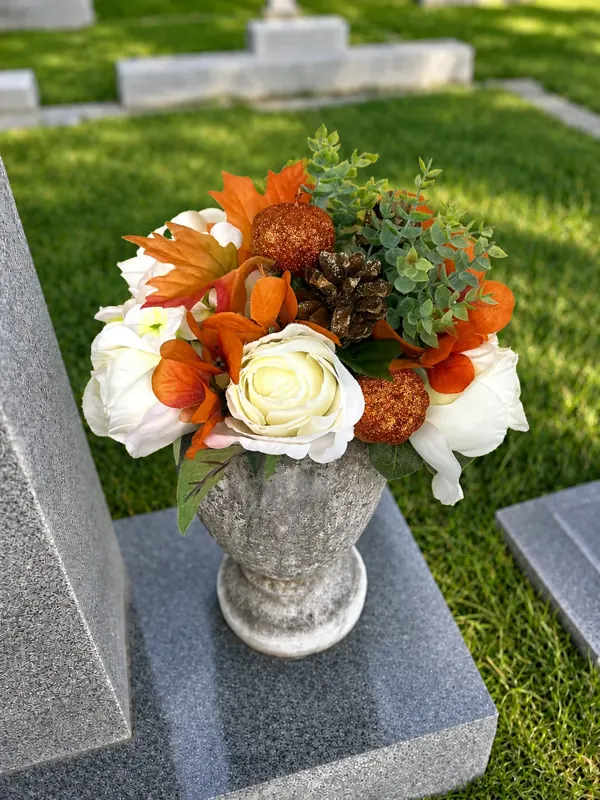 Fall Arrangement
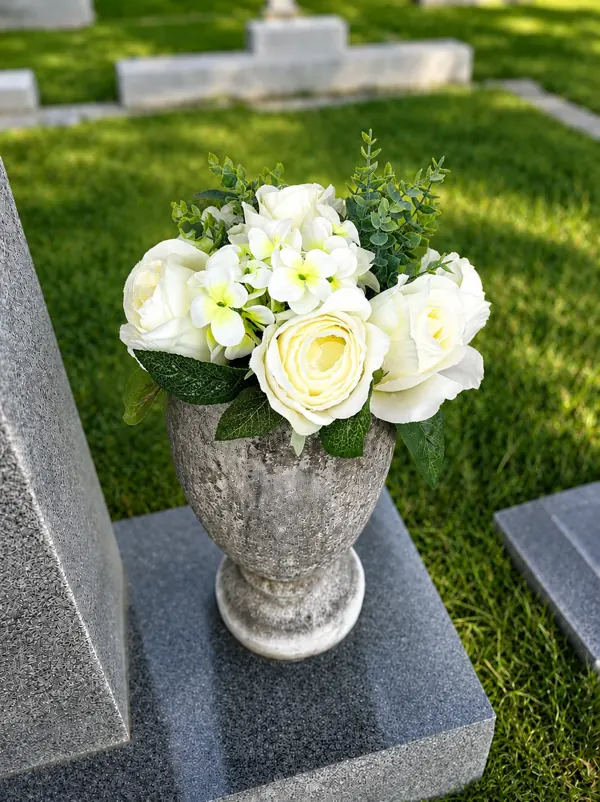 White Roses & Hydrangeas
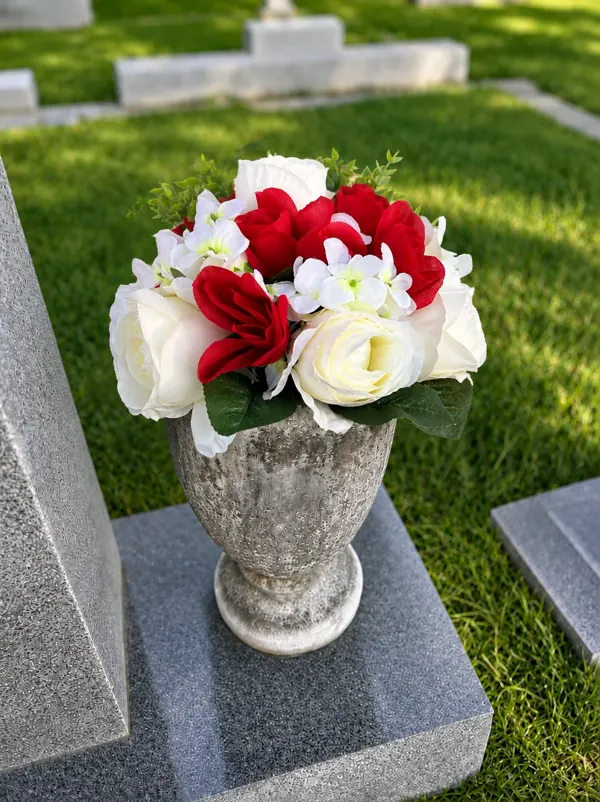 Red & White Roses
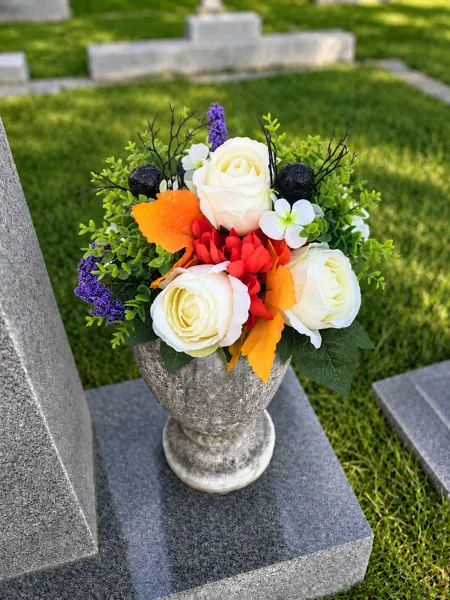 Halloween Arrangement
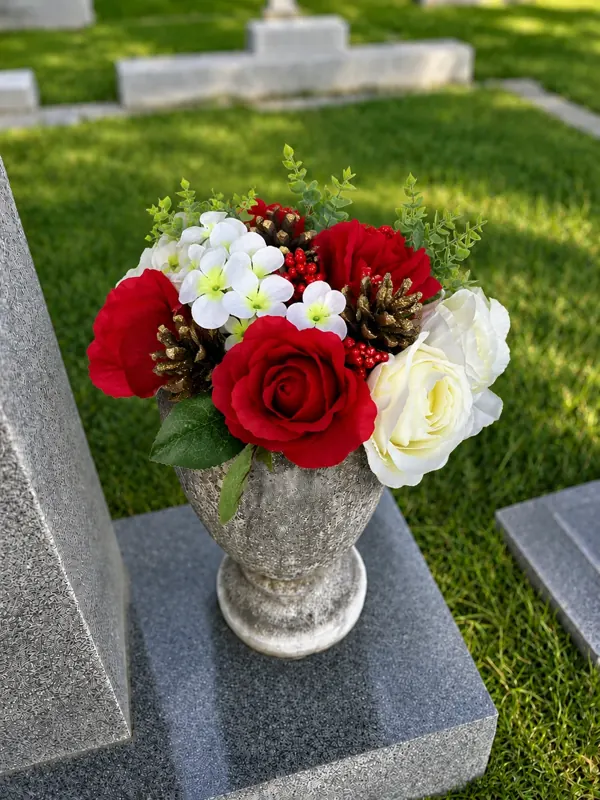 Holiday Arrangement
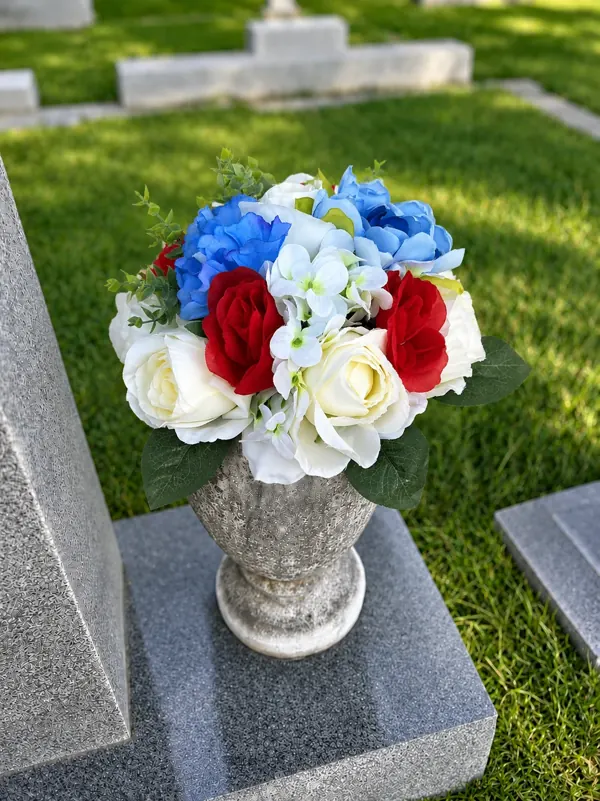 Red, White & Blue
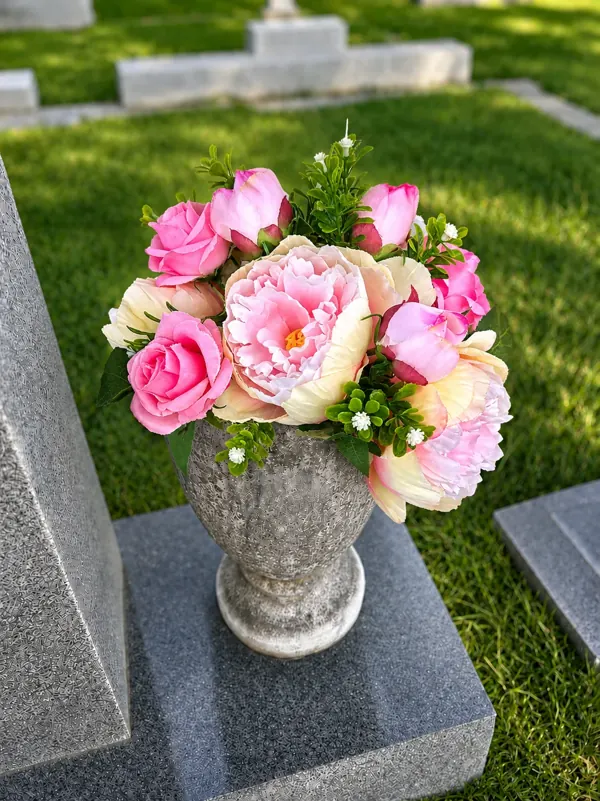 Pink Roses & Peonies
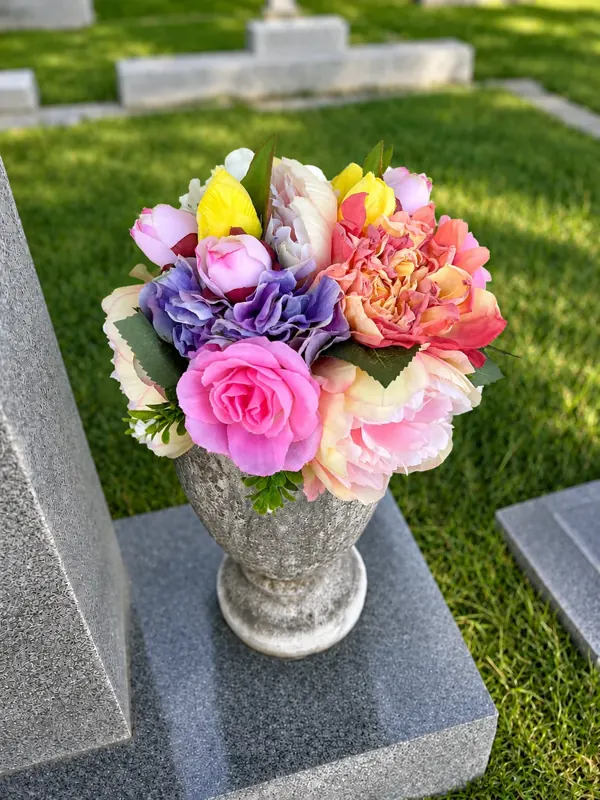 Pastel Multicolor
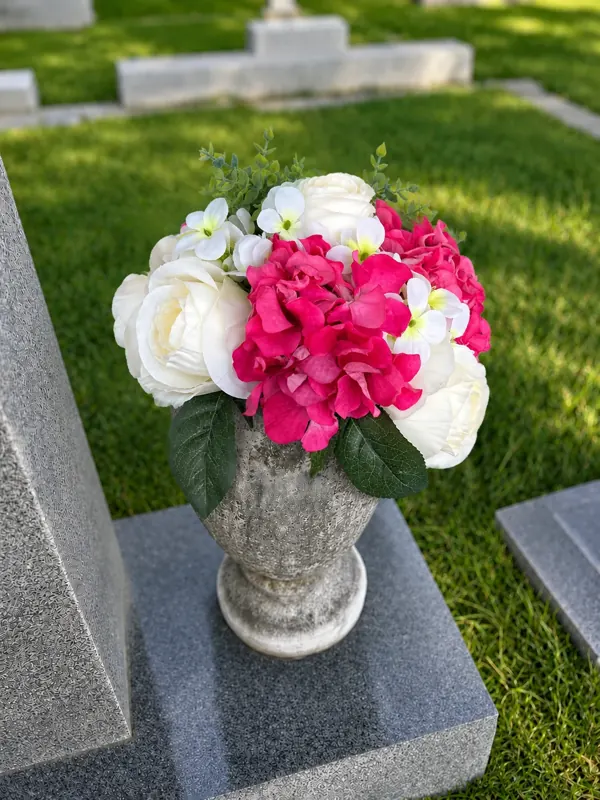 Hot Pink & White Roses
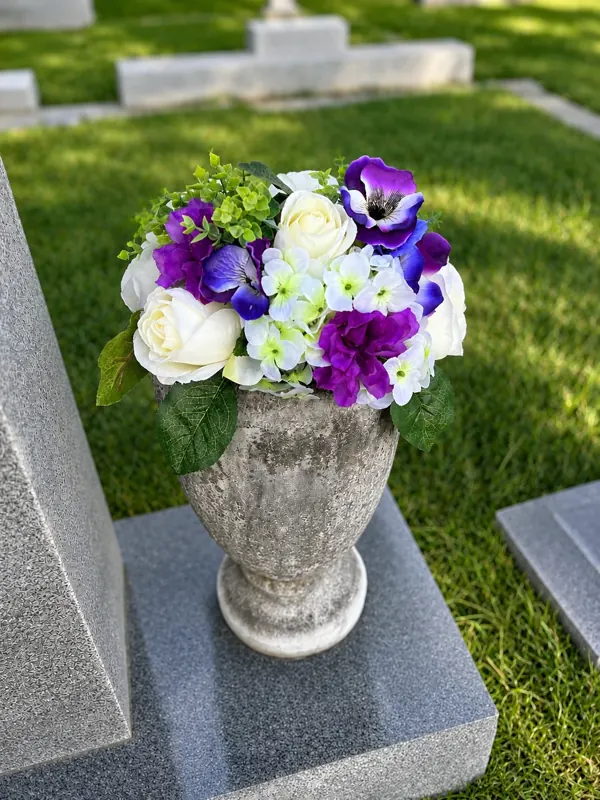 Purple Arrangement
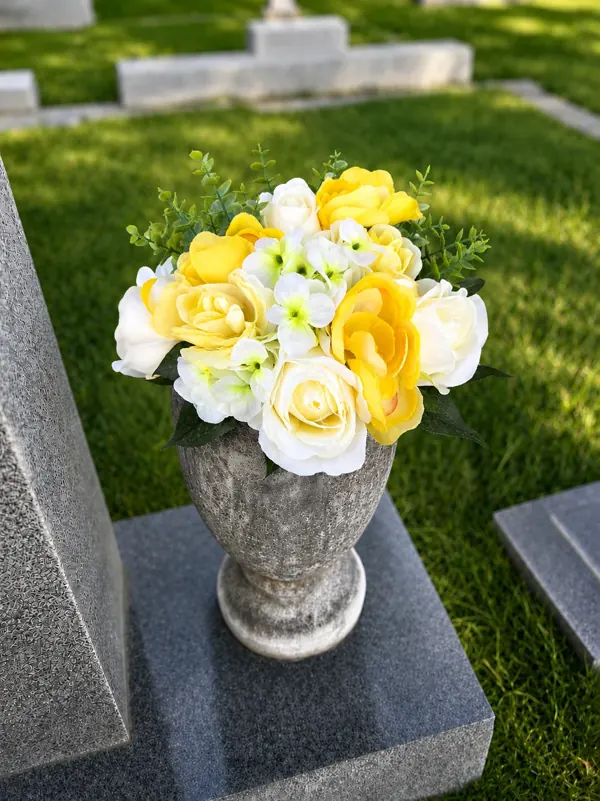 Yellow Arrangement
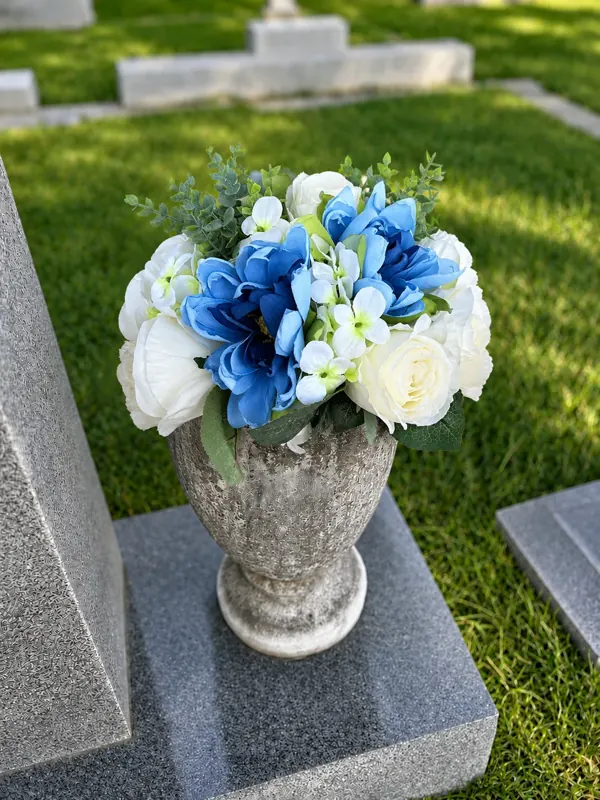 Blue Arrangement
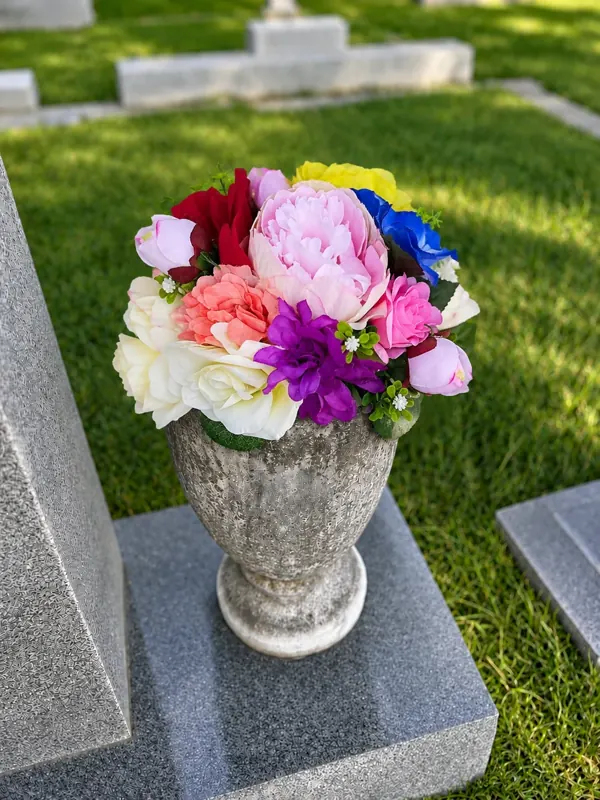 Birthday Arrangement
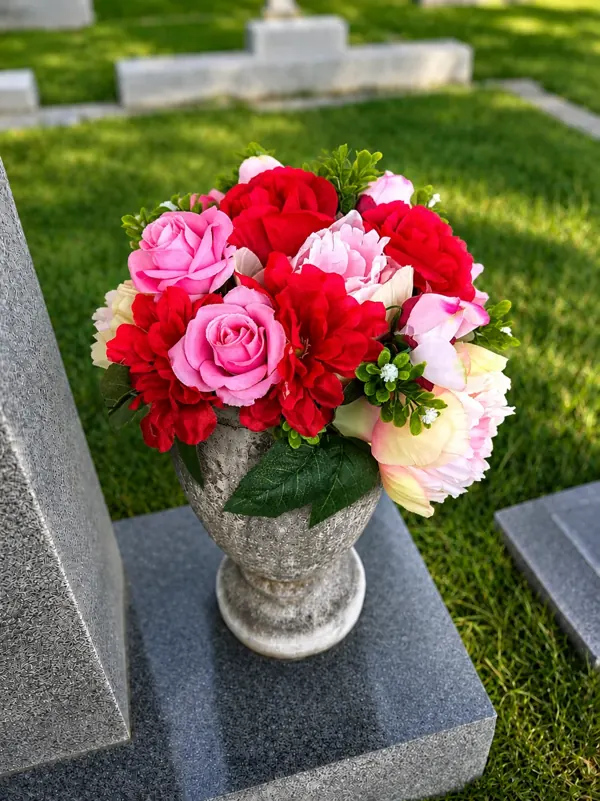 Always My Valentine
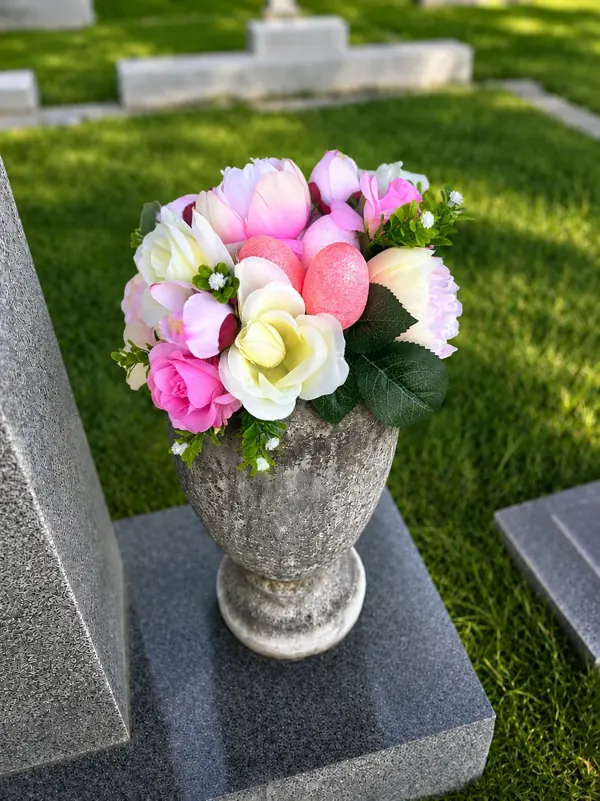 Easter Arrangement
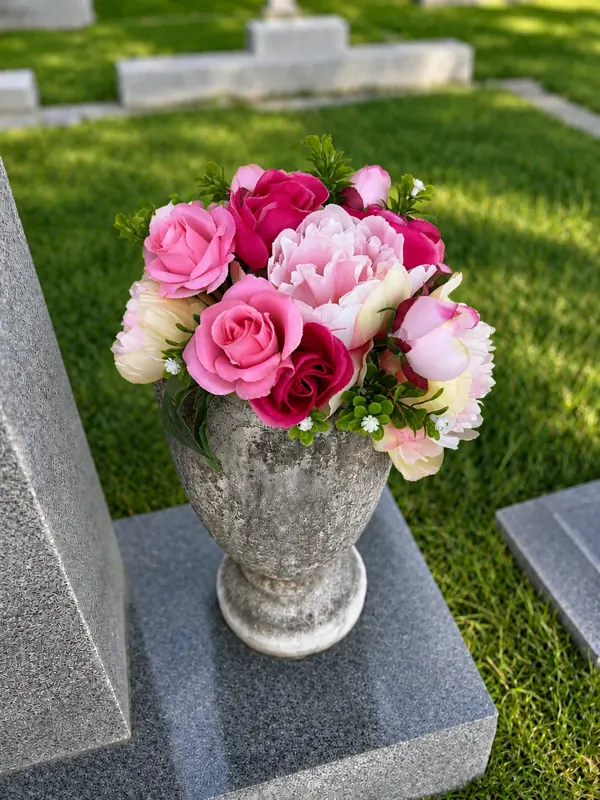 Breast Cancer Awareness
Grave flower delivery to any cemetery in all 50 states · find yours by state
Flowers at the grave, wherever it is
A local BloomBridge Runner places a hand-crafted arrangement at any cemetery in all 50 states and sends you a photo of it in place.
Send FlowersFrequently asked questions
A small stone on the headstone, a flag on a veteran's grave, a coin, a short written message in a weatherproof sleeve or on a card in an arrangement, a framed photo clipped to the vase, or a small keepsake tied in. Anything loose on the grass is usually removed.
On a military grave, a penny means someone visited, a nickel that they trained at boot camp with the person, a dime that they served together, and a quarter that they were there when the person died.
It is a Jewish tradition that marks a visit and endures in a way flowers do not. People of many faiths now leave a small stone for the same reason.
Yes, if it is protected. Seal it in a weatherproof sleeve and tuck it into the arrangement or under a stone on the headstone. Plain paper on its own does not survive the first rain.